Spec-first design
OpenAPI, SOAP, gRPC, and async patterns drafted, reviewed, and approved in one place — the same place they ship from.
Platform teams · Lifecycle
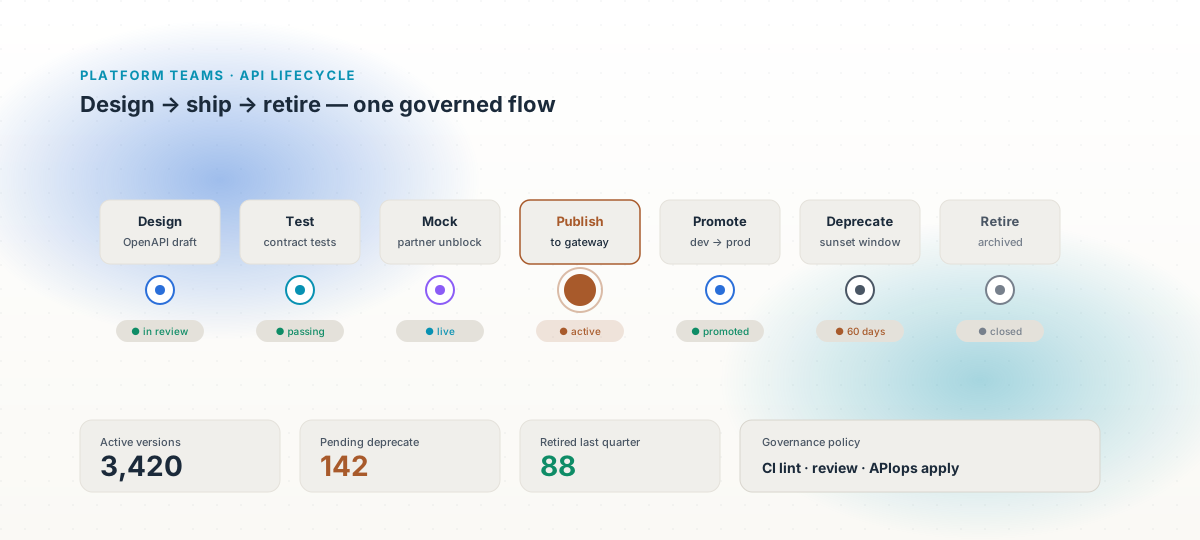
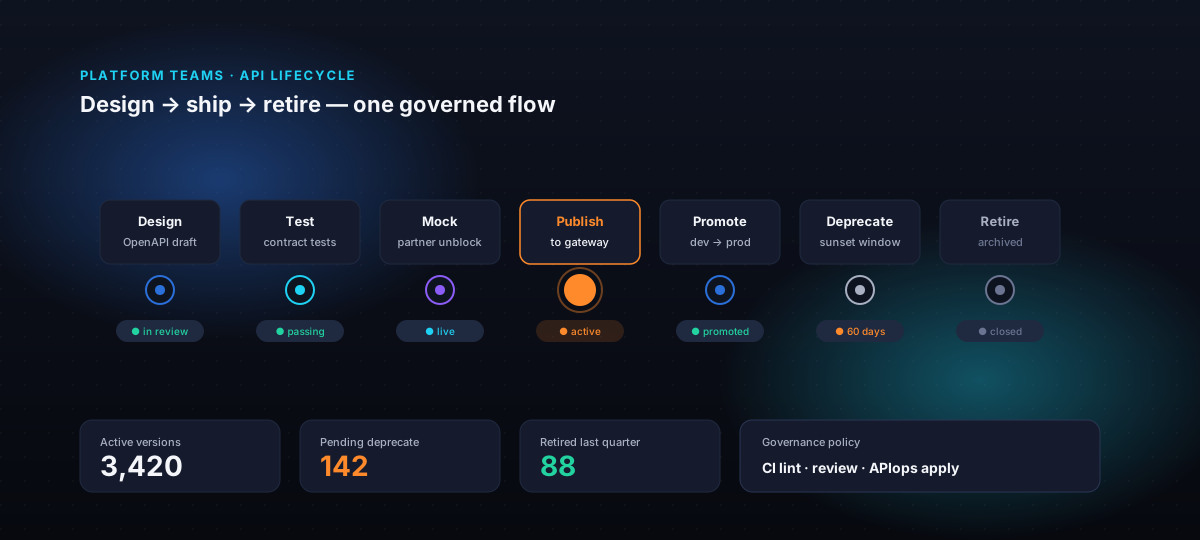
From OpenAPI draft to production cutover, every API lives on one timeline. Platform teams hand engineers a clean lane and hand auditors a clean trail.
The problem
Specs land in Confluence. Deploys live in someone's terminal history. Versioning is a vibe. When the audit team asks who changed the rate limit on Wednesday at 14:32, no one can answer. Apinizer turns the lifecycle into a system — one engineers prefer and auditors trust.
APIs
managed on one platform
legacy SOAPs
retired on schedule
review cycle
down from 2 weeks
Capabilities
OpenAPI, SOAP, gRPC, and async patterns drafted, reviewed, and approved in one place — the same place they ship from.
Move a definition from dev to test to production without touching the runtime. Promotion is a button, not a meeting.
Run two versions of the same endpoint at the same time. Partners migrate at their own pace; you don't break anyone's Monday.
Mark an endpoint deprecated, set the sunset date, broadcast it to consumers, and the gateway shuts the door when the clock hits zero.
Every change — who, what, when, from which IP — written immutably. Auditor evidence is a query, not a forensic project.
APIops manifests with name-based references and idempotent applies. Engineers ship from the same Git they already use.
Use cases
92 legacy SOAP endpoints retired on a published schedule. Spec reviews moved from Confluence to the gateway; deprecation notices reach partners 90 days before sunset.
92 endpoints retired
Plant integrations land as OpenAPI drafts in the platform first. Promotion to production needs a sign-off from quality + security — both wired into the gateway.
Pre-release reviews drop from two weeks to three days. Every version is queryable, side-by-side, with traffic counts and consumer breakdowns.
Review 2w → 3d
Dev → test → prod in one command. The compliance officer signs the same manifest engineers pushed — no parallel paperwork.
v2024-q1 and v2024-q3 served simultaneously. Partners migrate on their own clock; the gateway tracks who's still on v1 and reaches out programmatically.
Deprecation headers reach consumers 90 days out; the gateway returns a clear 410 with migration instructions on cutover day. Audit thanked the platform team.
130 endpoints, 0 surprises
The audit trail joins specs to issues to deploys. The regulator's quarterly evidence packet is a single export, generated overnight.
Daily deploys without an after-hours call. Same manifests power dev, test, and prod — environments differ only in the variables, not the definitions.
How it works
Each stage runs on the same platform — no exports, no parallel tooling, no hand-offs that lose history.
Draft the OpenAPI / SOAP / async contract in the platform. Reviewers approve in place; the spec is the source of truth.
Promote to staging with one click — or one APIops apply. The gateway picks up the new definition without a restart.
Add policies — auth, rate limits, transforms, versions — and watch real traffic in Analytics. Change anything; audit captures it.
Mark deprecated, set a sunset date, broadcast headers to consumers. On cutover, the gateway closes the door — and the auditor has the receipt.
Recommended products
Spec-first authoring for OpenAPI, SOAP, and async patterns — the place every API starts.
Open the Designer pageThe runtime that enforces every version, header, rate limit, and sunset date you ship.
Open the Gateway pageReal-time evidence of what every version is doing — who's still on v1, who's drifted to v3.
Open the Analytics pageSame lifecycle for LLM and agent endpoints. AI is just another version of the API.
Open the AI Gateway pageResources
How the platform handles design, promotion, versioning, and deprecation end-to-end.
Where the lifecycle lives on Kubernetes — Manager, Worker, and the audit plane.
Git-driven applies with name-based references, idempotent semantics, and the same audit aspect as the UI.
Recent lifecycle features — deprecation headers, version selectors, audit exports.
OpenAPI-first design with one-click proxy generation across protocols.
How Apinizer maps to BDDK, KVKK, GDPR, and ISO 27001 evidence requirements.
Stop versioning APIs in a wiki
A 30-minute walkthrough — design, promote, version, retire — on a Kubernetes cluster of your choice.