Worker — data plane

CORE PRODUCT

One gateway. HTTP, gRPC, WebSocket, and AI.

The Apinizer API/AI Gateway is a stateless, high-concurrency runtime that handles every API call in your platform — REST, SOAP, gRPC, WebSocket, GraphQL, and AI traffic. Per-request context, async logging, and hot deploy without restarts.

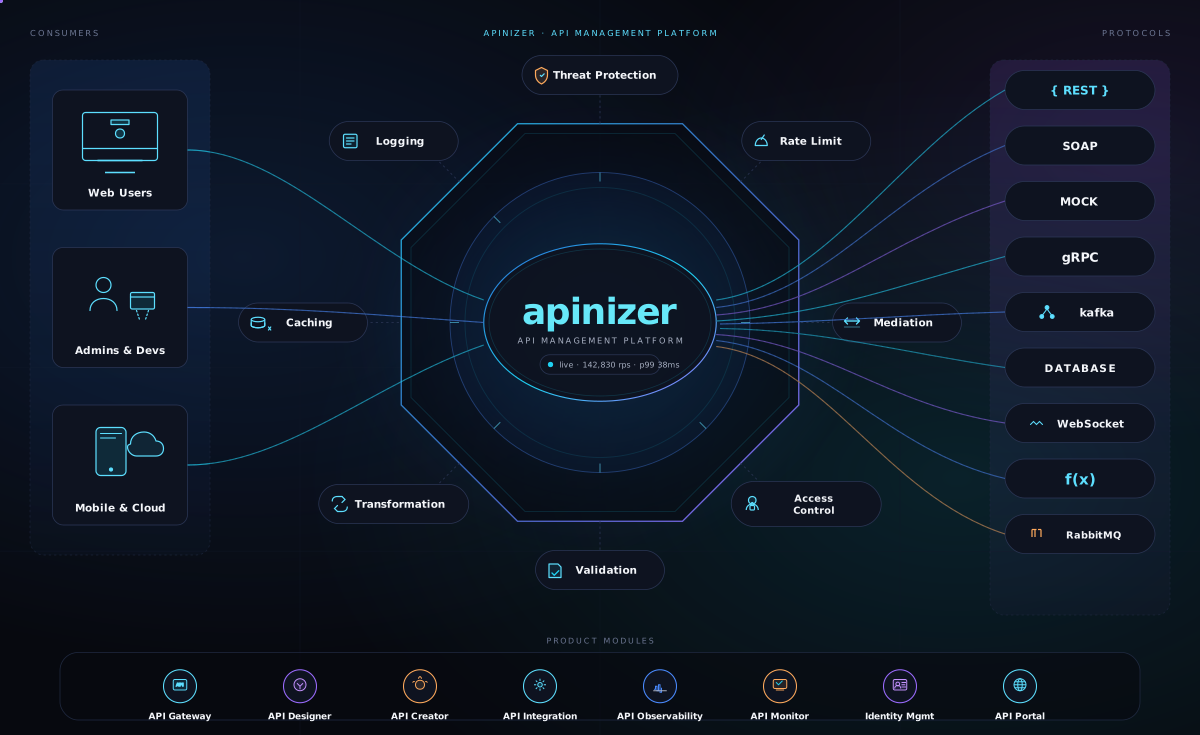
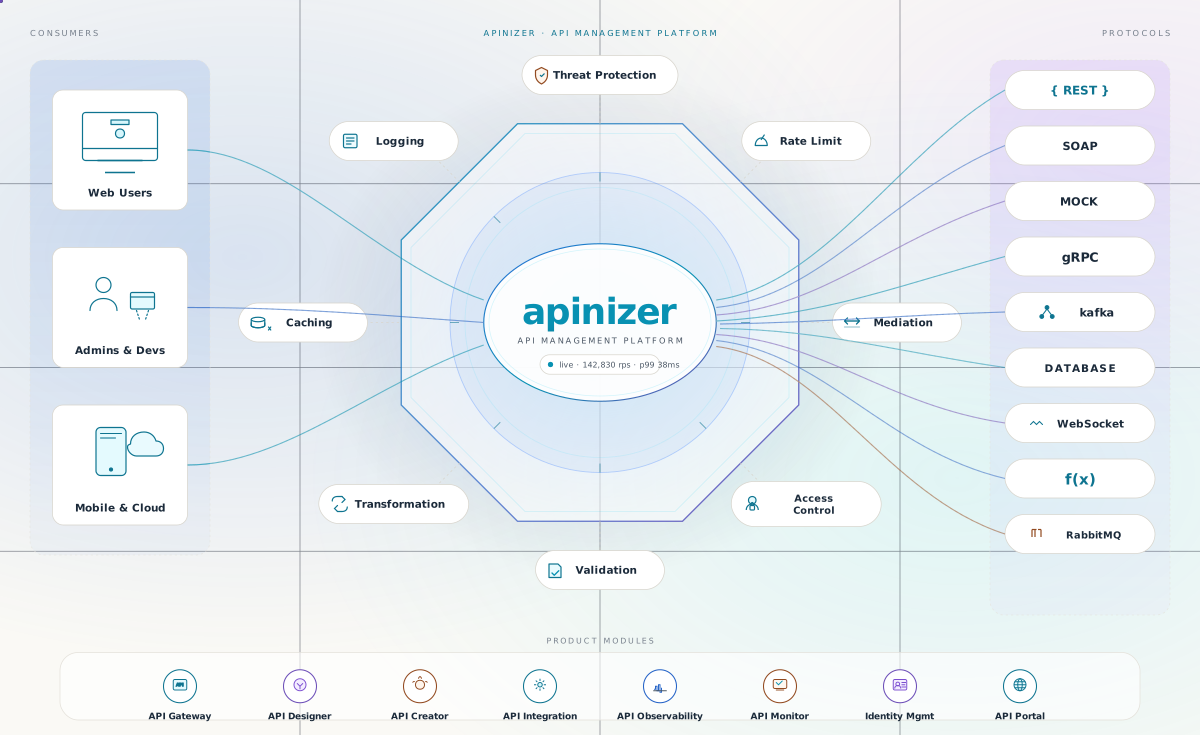
Apinizer API Management Platform overview

Inside the Manager

Every API proxy, one console.

Browse, filter, and govern every API proxy from a single Manager UI — across protocols, environments, and teams. The list below is a real screenshot from production deployments.

Apinizer Manager — API Proxies list with protocol, environment, and policy controls
Apinizer Manager · API Proxies list · production screenshot

Capabilities · deep dive

Eight capability areas. One Worker. Same policy surface for API and AI.

Authentication, advanced cryptography, traffic management, multi-protocol routing, mediation, lifecycle, observability — and AI traffic on the same gateway. Each capability is a real Apinizer policy or runtime feature, not a roadmap promise.

01 · Authentication & identity

Nine authentication methods. One policy surface.

Apinizer enforces auth before routing — modern OAuth 2.0 / OIDC / JWT alongside enterprise mTLS, SAML, and the Basic / Digest flows still living in your legacy estate. Every method ships as a first-class policy with a UI, not a plugin you have to write.

  • OAuth 2.0 (client credentials, password, code, refresh) and OIDC validation
  • JWT — including third-party JWT — with rotating JWKS support
  • mTLS with PKI-backed client certificates and HSM integration
  • SAML, Basic, Digest, Base64 auth for the legacy partners that still need them
  • Per-policy variable resolution — never raw fields, no cross-request leaks
  • oauth-2-auth
  • oidc-auth
  • jwt-auth
  • jwt-3rd-party-auth
  • policy-mtls-authentication
  • saml-validation
  • basic-auth
  • digest-auth
  • base64-auth

Same lane for AI

Agent traffic uses the same Identity Manager — every LLM call carries an OAuth-scoped token bound to a Project, not a shared API key.
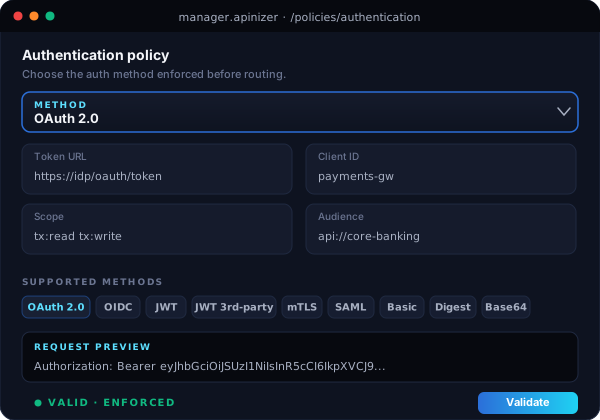
Authentication policy designer — OAuth 2.0 selected, with token URL, client ID, scope, and audience fields, plus chips for the eight other supported methods.

02 · Advanced cryptography & signing

WS-Security, JOSE, and digital signing — without bolt-ons.

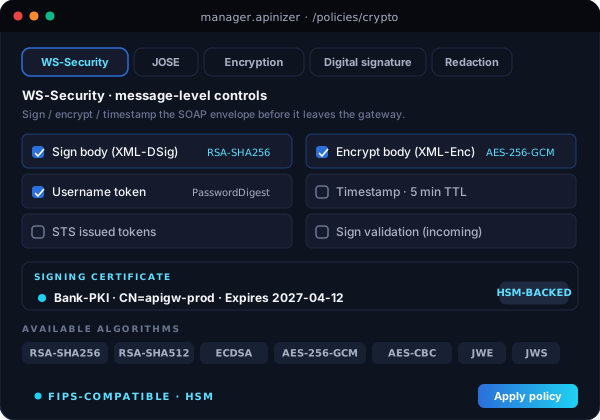
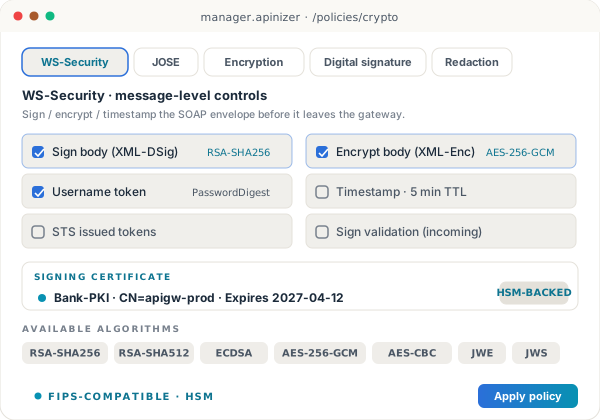
For banks fronting partner SOAP services and ministries running signed XML exchange, the gateway carries the full WS-Security suite plus JOSE encryption / signing for JSON. Sign, encrypt, and validate at the edge, with HSM-backed certificates the auditor can trace.

  • WS-Security: sign body, encrypt body, username token, timestamp, STS, sign validation
  • JOSE: JWS + JWE validation and implementation for modern JSON exchange
  • Standalone encryption / decryption + digital sign / verify policies
  • FIPS-compatible algorithms (RSA-SHA256/512, ECDSA, AES-256-GCM, AES-CBC)
  • Field-level redaction at egress — masked for tier<ADMIN, in plain in audit
  • policy-ws-security-sign
  • policy-ws-security-encrypt
  • policy-ws-security-username
  • policy-ws-security-timestamp
  • policy-jose-validation
  • policy-jose-implementation
  • policy-encryption
  • policy-decryption
  • policy-digital-sign
  • redaction

Same lane for AI

Same redaction policies sanitize PII out of LLM prompts and responses — no separate AI redaction stack to operate.

Advanced cryptography panel — WS-Security tab active with sign and encrypt body checked, RSA-SHA256 and AES-256-GCM algorithm selectors, HSM-backed certificate selected.

03 · Traffic management & quotas

Rate limit, throttle, quota — at the API, role, or subscriber level.

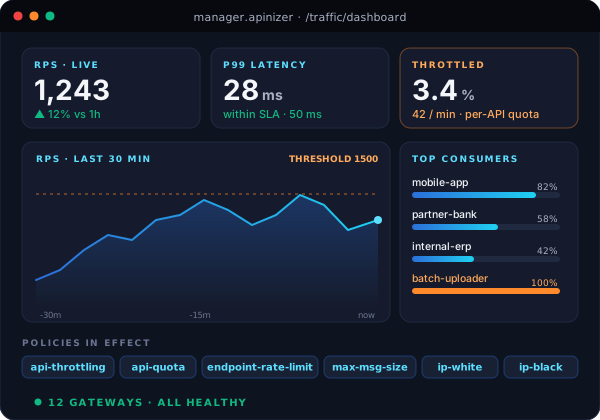
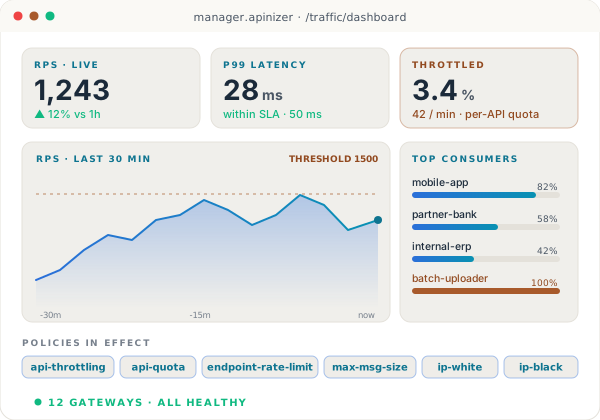
Apinizer's RLCL (Rate Limit · Caching · Logging) policies give you granular control over every request. Per-API throttling, per-subscriber quotas, IP allow- and deny-lists, message-size caps, and an Allowed Hours policy for partners that should only call between 09:00–18:00.

  • API throttling and per-subscriber quota with burst windows
  • Endpoint rate limit policies on individual paths
  • Min and max message size enforcement (XXE / oversize-body protection)
  • IP white / black lists and content filtering for known bad patterns
  • Allowed Hours policy — partner contracts that only run during business hours
  • api-based-throttling
  • api-based-quota
  • policy-endpoint-rate-limit
  • max-message-size
  • min-message-size
  • ip-white
  • ip-black
  • content-filter
  • allowed-hours

Same lane for AI

Token-based rate limiting joins the same surface — limit by tokens-per-minute or cost-per-team, not just requests.

Traffic management dashboard — live RPS at 1,243, P99 latency 28ms, throttled at 3.4%, with a 30-minute RPS chart and top consumers list with quota progress bars.

04 · Multi-protocol routing

HTTP, gRPC, WebSocket, SOAP, GraphQL — one Worker, one runtime.

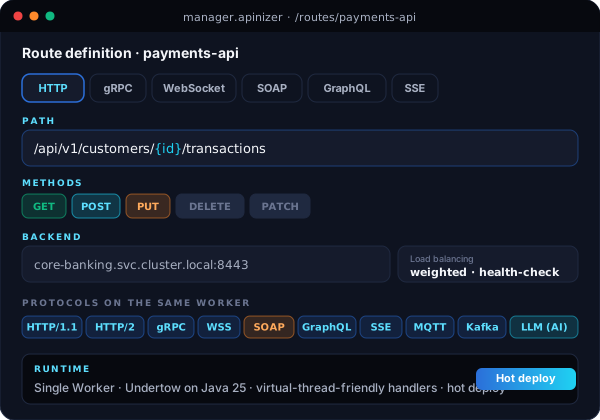
Three first-class routing handlers sit on a single Undertow loop: HttpRoutingHandler, GrpcRoutingHandler, WebSocketRoutingHandler. SOAP-as-REST, GraphQL proxy, Server-Sent Events, MQTT and Kafka bridges round out the protocol coverage. No second runtime, no second observability stack.

  • HTTP/1.1 and HTTP/2 with full streaming and content compression
  • Native gRPC — unary plus bidirectional streams, transcoding gRPC ↔ REST
  • WebSocket with sub-protocol negotiation and TLS (WSS)
  • SOAP / WSDL primed at deploy — exposed as REST or gRPC for modern consumers
  • GraphQL proxy, Server-Sent Events, MQTT and Kafka bridges
  • HTTP/1.1
  • HTTP/2
  • gRPC
  • WebSocket (WSS)
  • SOAP / WSDL
  • GraphQL
  • SSE
  • MQTT
  • Kafka
  • LLM (AI)

Same lane for AI

The OpenAI-compatible /ai/v1/chat/completions endpoint is just another route — same Worker, same audit, same RBAC.

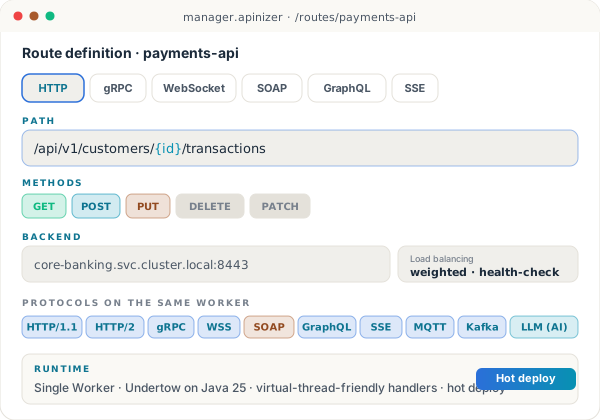
Multi-protocol route editor — HTTP tab active, path /api/v1/customers/{id}/transactions, GET and POST methods enabled, all 10 protocols listed including LLM (AI) on the same worker.

05 · Mediation & transformation

SOAP ↔ REST, XML ↔ JSON — visually, without the rewrite.

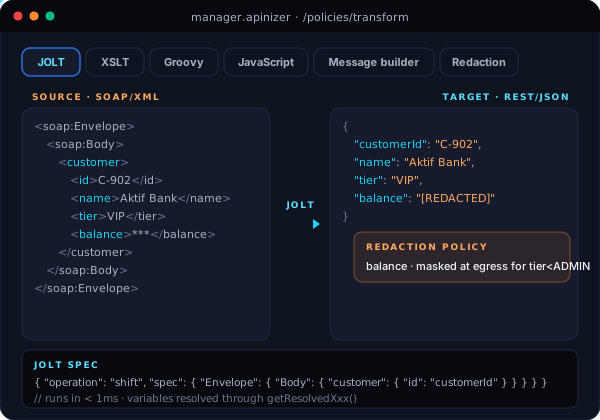
Translate between contracts at the gateway: JOLT for JSON shape changes, XSLT for XML, Groovy and JavaScript when you need code, Message Builder for response synthesis, and standalone Redaction for the fields auditors care about. Every transform runs in milliseconds with variables resolved through a single API.

  • Protocol transformation request / response (SOAP ↔ REST, REST ↔ gRPC)
  • JOLT for JSON shape changes, XSLT for XML transforms
  • Groovy and JavaScript script policies for the cases that need code
  • Message Builder — synthesize responses from upstream calls
  • Redaction policy — mask fields at egress without losing them in audit
  • protocol-transformation-request
  • protocol-transformation-response
  • policy-json-transformation
  • policy-xml-transformation
  • script (Groovy / JS)
  • message-builder
  • redaction

Same lane for AI

Transformation policies also reshape LLM payloads — vendor-specific request bodies normalized to the OpenAI-compatible facade.

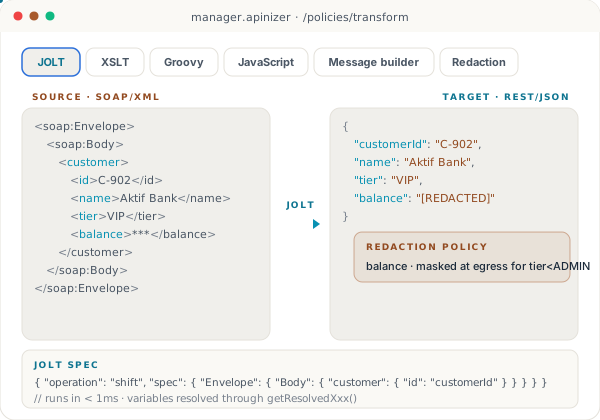
Visual transformation designer — SOAP/XML source on the left, REST/JSON target on the right, JOLT spec preview at the bottom with field-level redaction policy applied.

06 · API lifecycle & mock

Versioning, mocks, and schema validation — primed at deploy.

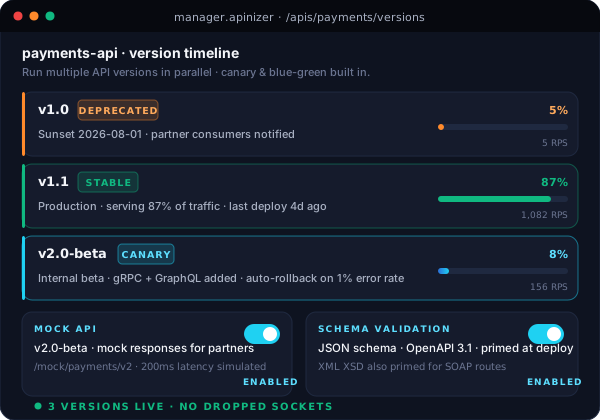
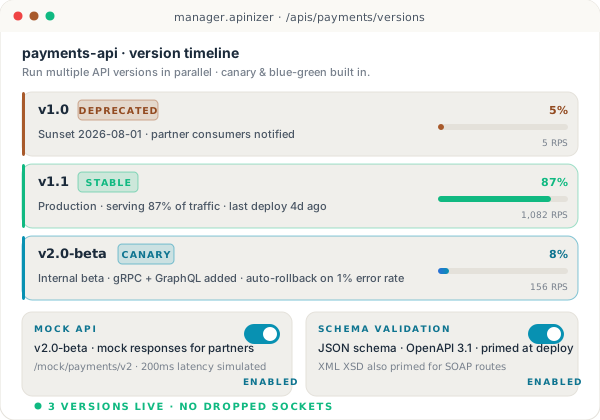
Run multiple API versions in parallel with traffic-split routing — canary 8%, stable 87%, deprecated 5%. Mock APIs for partners testing v2.0-beta. JSON Schema and XML XSD validators are primed at deploy time, never on first request.

  • Run multiple API versions in parallel — traffic split, canary, blue-green
  • Mock API responses for partners and pre-prod testing
  • JSON Schema validation primed at deploy — no first-request penalty
  • XML XSD validation for SOAP routes — same warm-up guarantee
  • Hot deploy: routing tables, marshalled routes, and load balancer flush atomically
  • json-schema-validation
  • xml-schema-validation
  • business-rule
  • Hot deploy
  • Canary release
  • Blue-green
  • Mock API

Same lane for AI

AI Gateway routes ship through the same versioning — pin a model to v1.1 while v2.0-beta tests a cheaper provider.

API lifecycle panel — payments-api with v1.0 deprecated (5% traffic), v1.1 stable (87% traffic, 1,082 RPS), v2.0-beta canary (8% traffic), and mock + schema validation toggles enabled.

07 · Observability & audit

Async logging that never blocks the request path.

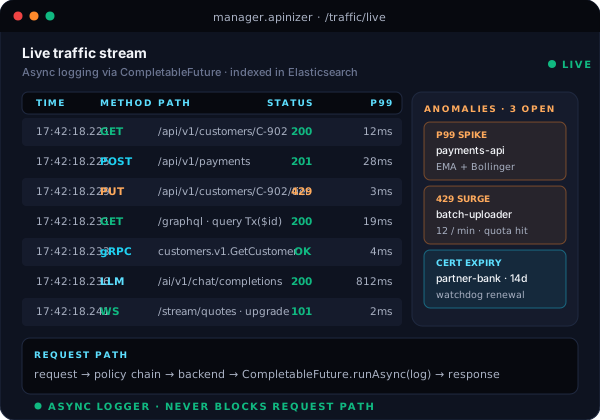
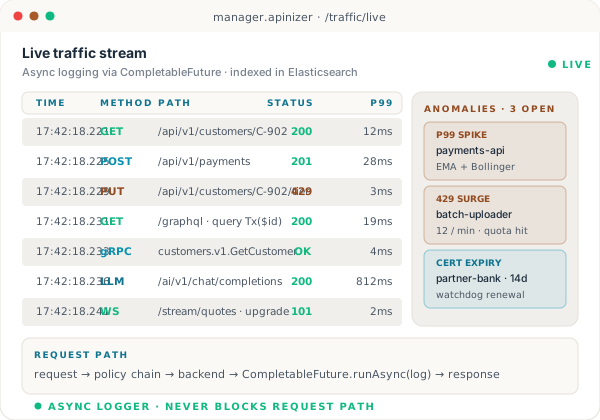
Traffic logs are emitted via CompletableFuture.runAsync() onto a dedicated executor — the request path stays cold, the log path stays out of the way. Every request, header rewrite, policy execution, and routing decision lands in Elasticsearch, queryable side-by-side with your gRPC and LLM traffic.

  • Async traffic logging — request path never waits on the log writer
  • MessageContext per request — never shared, MDC cleared in finally{}
  • Real-time anomaly detection (EMA + Bollinger Band) with multi-channel alarms
  • Certificate watchdog — partner cert expiries surface 14 days ahead
  • Audit trail enforced by the persistence layer — bypass rejected at compile time
  • policy-log
  • Elasticsearch
  • Anomaly detection
  • Certificate watchdog
  • Audit aspect
  • MDC per request

Same lane for AI

Token usage, cost-per-team, and prompt-firewall hits land in the same Elasticsearch index — one query for API + AI behavior.

Live traffic stream — seven request rows showing GET, POST, gRPC, WS, and LLM traffic with status codes and P99 latency, plus an anomaly sidebar with three open alerts (P99 spike, 429 surge, certificate expiry).

08 · AI traffic on the same gateway

Multi-LLM routing with token quotas and a prompt firewall.

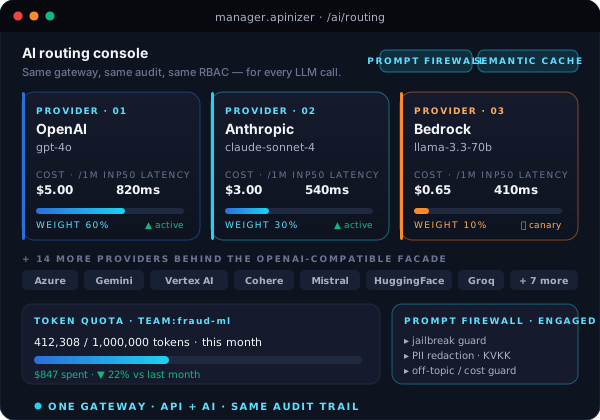
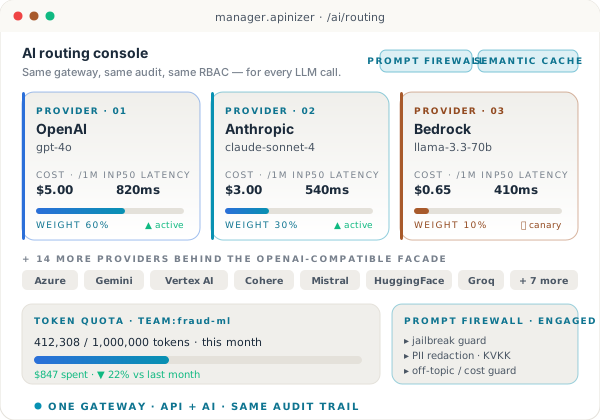
The same gateway that fronts your REST and gRPC APIs governs every LLM call. 17+ providers behind one OpenAI-compatible facade — switch on cost, latency, or per-prompt classification without rewriting the application. Token quotas, semantic caching, and prompt firewalls are policies, not external services.

  • OpenAI-compatible facade across 17+ providers (OpenAI, Anthropic, Bedrock, Azure, Gemini, Cohere, …)
  • Weighted multi-LLM routing — cost / latency / per-prompt classification
  • Token-based rate limiting — TPM and RPM per user / API key / team
  • Semantic caching for repeat prompts — drop spend on hot queries
  • Prompt firewall: jailbreak guard, PII redaction, off-topic / cost guards
  • Multi-LLM routing
  • Token quotas
  • Semantic cache
  • Prompt firewall
  • PII sanitization
  • MCP servers
  • Agent-to-Agent (A2A)

Same lane for AI

AI Gateway is a layer of policies on top of the same Worker — not a separate runtime to operate.

AI routing console — three LLM provider cards (OpenAI gpt-4o, Anthropic claude-sonnet-4, Bedrock llama-3.3-70b) with cost, latency, and weight, plus token quota progress bar and prompt firewall status.

In the box

What's included

The capabilities below are part of the standard install — no add-on SKUs and no separate licenses.

Runtime

  • Undertow with virtual-thread-friendly handlers
  • HTTP, gRPC, WebSocket on one process
  • MessageContext per request — never shared
  • MDC cleared in finally{} on every request

Operability

  • Hot deploy and undeploy
  • Coordinated cache invalidation
  • Async traffic logging via CompletableFuture
  • Schema validator + WSDL primed at deploy time

Ready when you are

Run the gateway on your own Kubernetes.

A 30-minute walkthrough of the Apinizer API/AI Gateway — protocols, policies, and operability on a cluster of your choice.