Monitoring

See every heartbeat. Catch every incident.

Synthetic probes from your regions, anomaly detection that catches drift, and severity-aware routing to every channel your operators already live in.

  • DetectionUptime · Anomaly · Platform
  • MathEMA + Bollinger
  • Channels9 actions · 15+ connectors

Capabilities · deep dive

Seven properties that catch every incident before the ticket arrives.

Uptime probes from your regions; anomaly detection with EMA and Bollinger bands; ten platform alert triggers ready on day one; CPU and memory rules per component; severity-aware action chains to Slack, Teams, ServiceNow, email, webhook, and more; four severity grades with full audit; and one operations dashboard for all four lanes — every property a real Apinizer capability, not a roadmap promise.

01 · Uptime monitoring

Probe like a customer. From everywhere they live.

Synthetic checks run from the regions your gateway already does — and validate not just a 200 OK, but the right body, headers, and latency budget the SLA promises.

  • Three targets — managed proxy, backend API, external endpoint
  • Schedule · 1 / 5 / 10 / 30 minutes or a cron expression
  • Assertions · status, body, XPath, JsonPath
  • Retry on fail with configurable count and delay
  • Same monitor on every environment — dev, test, production
  • 3 target types
  • Status · body · XPath · JsonPath
  • Retry on fail
  • Multi-environment
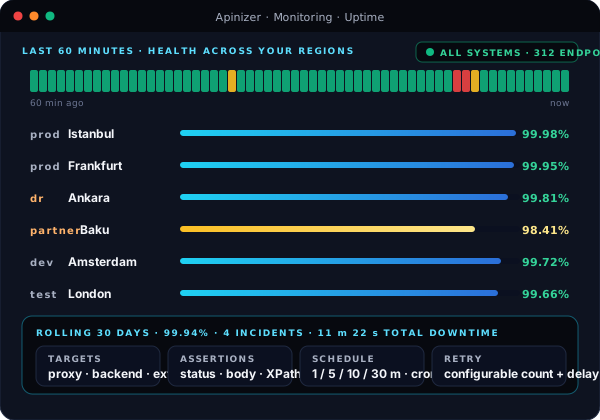
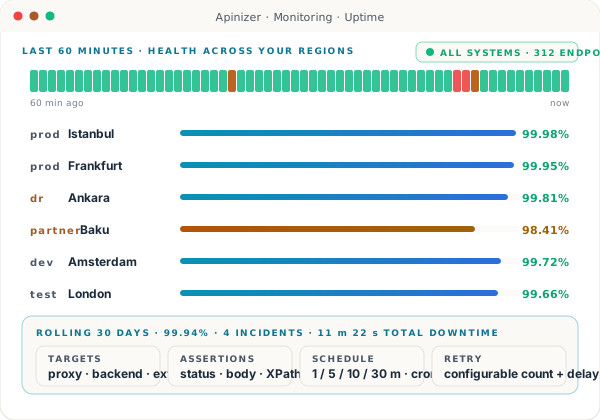
Uptime health view — a sixty-cell hourly status grid runs across the top, mostly green with one amber minute mid-hour and two red minutes near the end; six region and environment rows underneath show success ratios for production Istanbul, production Frankfurt, disaster-recovery Ankara, partner Baku, development Amsterdam, and test London, each with a coloured progress bar and a percentage; a status pill in the header reports the rolling thirty-day availability.

02 · Anomaly detection

Catch issues no threshold could.

EMA with Bollinger bands evaluates the trend, not just the value. Two sliders tune sensitivity; one toggle picks fire-per-event or once-per-series.

  • Any Elasticsearch query as the source
  • EMA with upper and lower Bollinger bands
  • Sensitivity · data points + standard deviation multiplier
  • Execute mode · per event or once per series
  • Charted detection — metric, EMA, bands, every marker
  • Threshold
  • EMA + Bollinger
  • Per event / series
  • Trend-aware
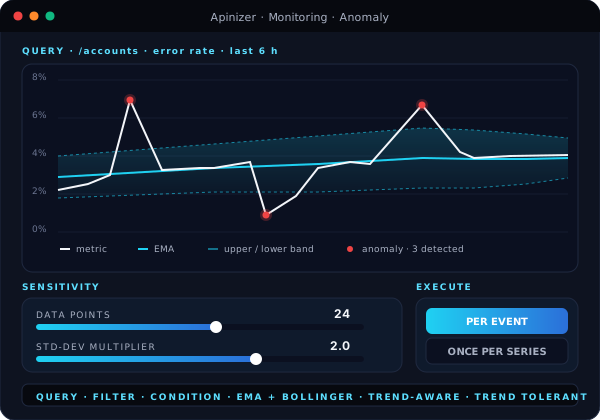
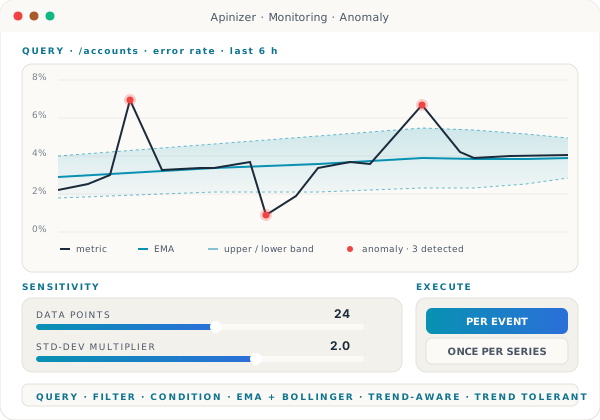
An anomaly detection chart shows the metric line crossing an EMA centerline and its upper and lower Bollinger bands; three red markers appear where the metric breaks the band; a sensitivity panel pins data points and standard deviation multiplier sliders, and an execute-mode toggle picks between per-anomaly-event and once-per-anomaly-series.

03 · Platform alerts

Pods, nodes, certificates — every alert your operators want.

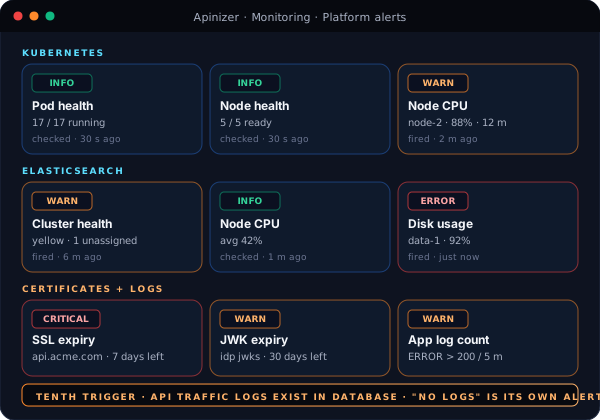
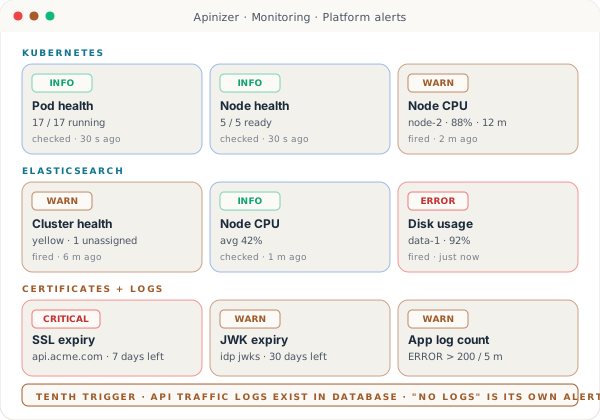
Ten triggers ship with the platform — Kubernetes, Elasticsearch, certificates, and logs. Each comes with a threshold, a schedule, a severity, and the same action chain you use everywhere else.

  • Kubernetes · pod health, node health, node CPU
  • Elasticsearch · cluster health, CPU, disk
  • Certificates · SSL and JWK expiry windows
  • Logs · application log count and traffic log presence
  • Same severity grades and action chains as everything else
  • 10 triggers
  • Kubernetes
  • Elasticsearch
  • SSL · JWK
  • Log presence
A grid of nine alert trigger cards organized in three rows — Kubernetes covering pod health, node health, and node CPU; Elasticsearch covering cluster health, CPU, and disk percentage; certificates and logs covering SSL expiry, JWK expiry, and application log count; each card carries a severity pill, a current value, and a last-fired timestamp; a footer card pins the tenth trigger for API traffic logs presence in the database.

04 · System health

CPU and memory. Per component. Sustained.

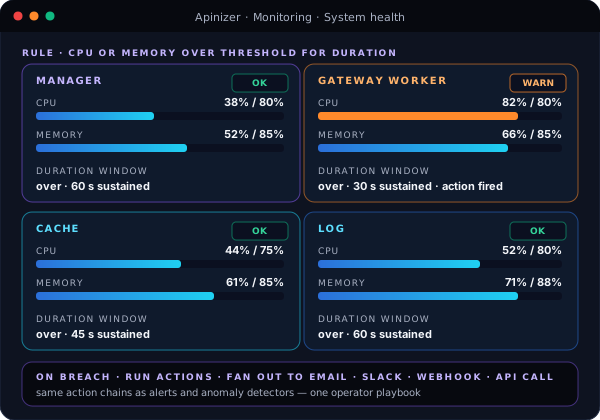
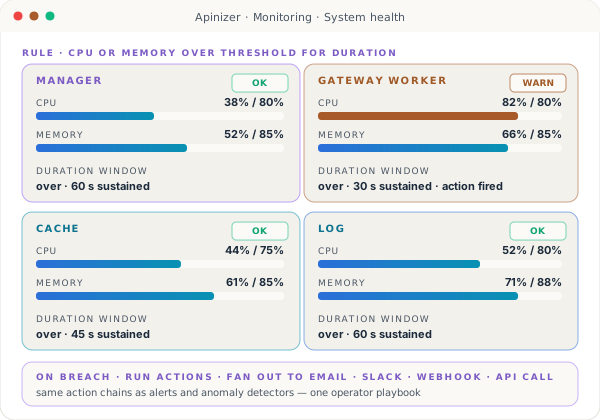
Manager, Gateway Worker, Cache, and Log — each has its own threshold and duration window. A one-second spike never pages anyone; eighty percent for thirty seconds does.

  • Per-component thresholds for Manager, Worker, Cache, Log
  • Duration window — sustained-over-time, not a spike
  • Same severity grades as API alerts
  • Same action chains as the rest of the platform
  • Audit of every breach and every resolution
  • Manager
  • Worker
  • Cache
  • Log
  • Threshold + duration
Four component health panels in a two-by-two grid — Manager, Gateway Worker, Cache, and Log — each showing CPU and memory progress bars with current value against a threshold and a duration window pinned underneath; a header reads each panel as "over threshold for duration" rules, and a footer card pins the action-on-breach configuration.

05 · Action chains

Right person. Right channel. Right now.

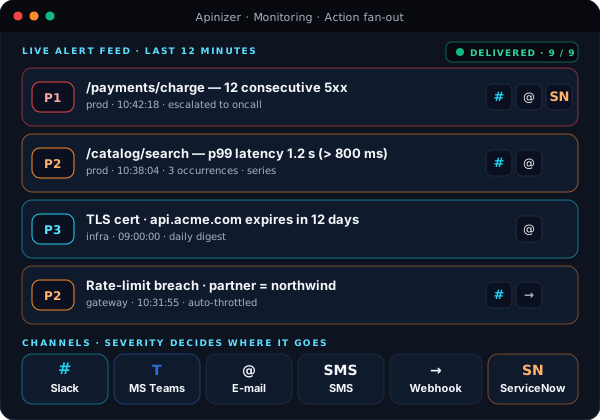
Severity decides where the alarm goes — P1 to on-call, P3 to the daily digest — across nine action types and fifteen-plus connectors.

  • Severity-aware routing · P1 to on-call, P3 to digest
  • Nine action types · email, webhook, API, DB, script, SNMP
  • Connector library · Slack, Teams, ServiceNow, and 15+ more
  • Grouping, deduplication, acknowledgment, escalation
  • Acknowledge from Slack — no context switch
  • Slack · Teams
  • ServiceNow · Email
  • Webhook · API · DB
  • Script · SNMP
  • Group · dedup · escalate
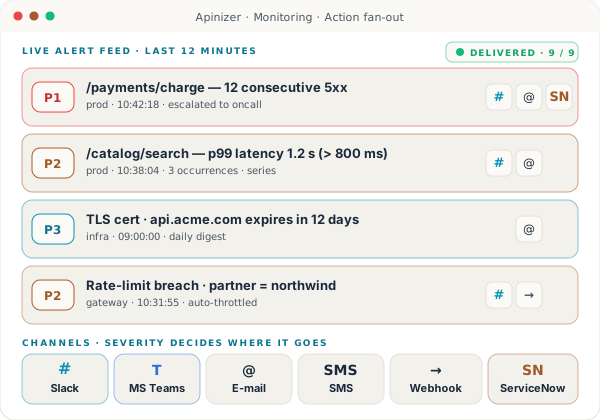
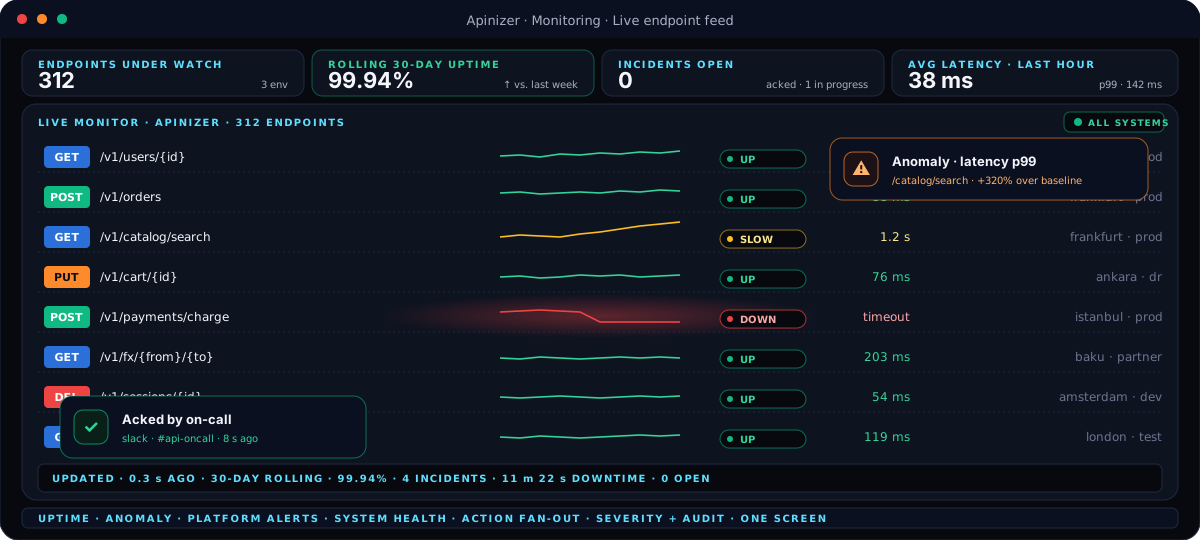
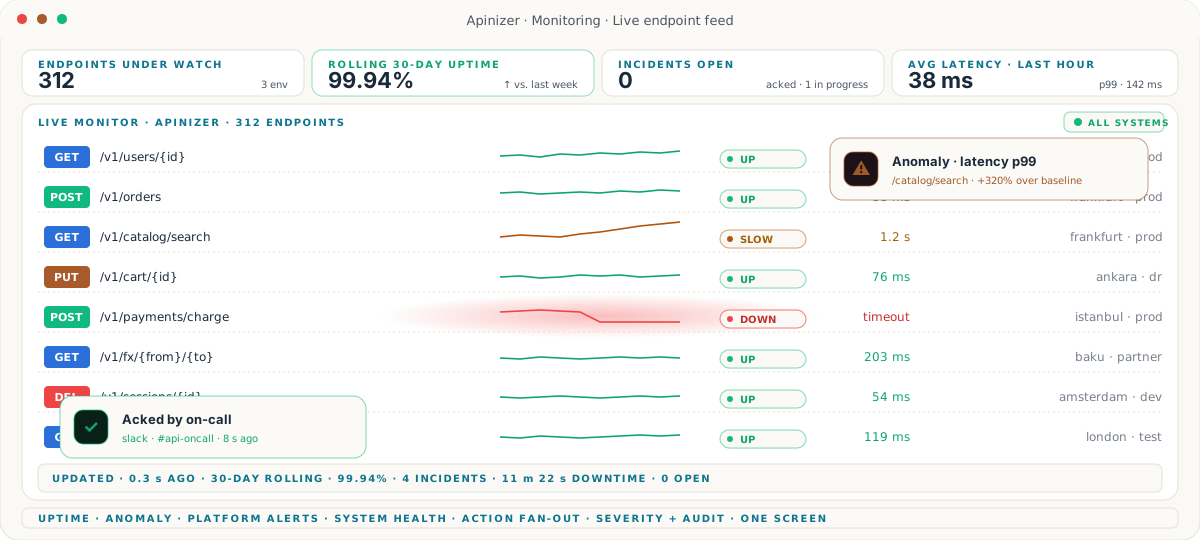
A live alert feed with four severity-coloured rows — a P1 critical for consecutive 5xx errors on a payments endpoint, a P2 warning for elevated p99 latency on catalog search, a P3 informational for a TLS certificate expiring in twelve days, and a P2 warning for a rate-limit breach by a partner — each row shows recipient channels as small icon chips and a sub-line with the timestamp and outcome; a six-chip channel bar runs along the bottom for Slack, Microsoft Teams, email, SMS, webhook, and ServiceNow.

06 · Severity + history

Four grades. Every probe stored. Full audit.

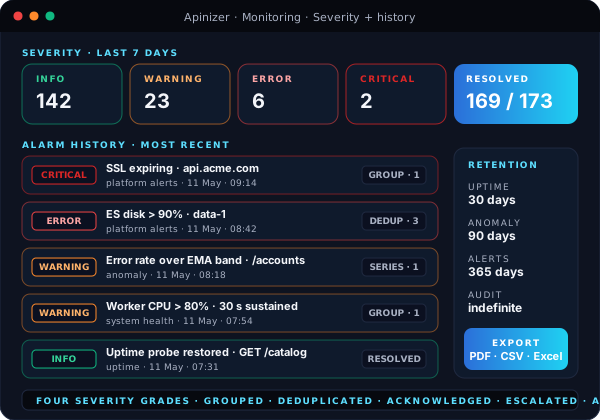
Info, warning, error, critical — every detection is graded, grouped, deduplicated, and audited. Retention is configurable per surface; exports go straight to PDF, CSV, or Excel.

  • Four severity grades · info, warn, error, critical
  • Grouping, deduplication, series for repeated detections
  • Retention per surface · uptime, anomaly, alerts, audit
  • Acknowledged · escalated · resolved as state transitions
  • Export to PDF, CSV, Excel — auditor-ready
  • Info · Warn · Error · Critical
  • Group · dedup · series
  • Configurable retention
  • PDF · CSV · Excel
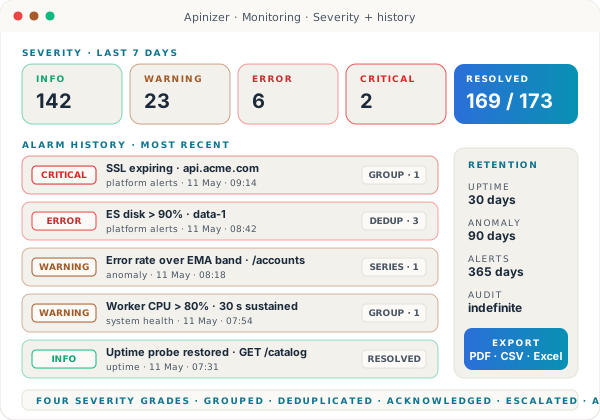
Four severity counter pills at the top — info, warning, error, critical — render the weekly volume of each grade; underneath a timeline lists the most recent alarm history entries with their severity badges, source modules, timestamps, and group or deduplication tags; a right-side retention panel pins the configurable retention window per surface and audit details.

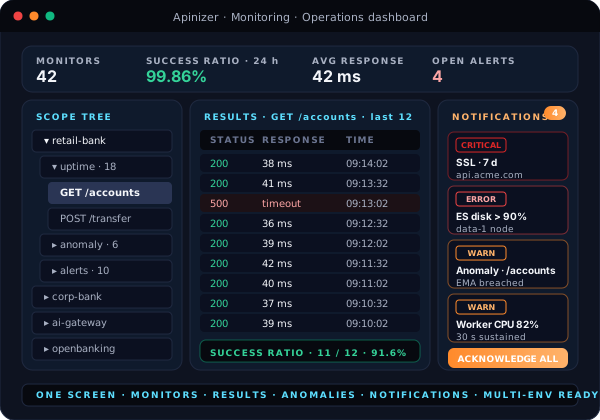
07 · Operations dashboard

One screen. All four lanes.

Monitors, results, anomalies, notifications — one screen, no console switching. Same screen across dev, test, and production.

  • KPI strip · monitors, success ratio, average response, open alerts
  • Scope tree by project and monitor type
  • Result grid with coloured status, response time, timestamp
  • Notification panel with unread badge and severity-coloured cards
  • Same screen across every environment
  • KPI strip
  • Scope tree
  • Result grid
  • Notification panel
  • Multi-env
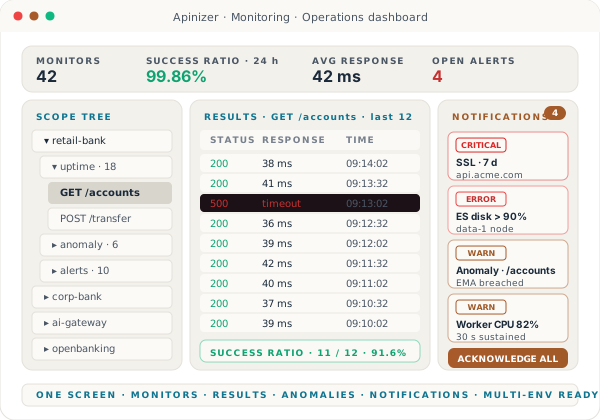
An operations dashboard mockup with a top KPI strip and three panels — a left scope tree organized by project and monitor type; a middle uptime result grid showing the most recent probes with coloured status code, response time, and timestamp; and a right notification panel with an unread badge and four recent alerts ready to acknowledge or escalate.

In the box

What's included

The capabilities below are part of the standard install — no add-on SKUs and no separate licenses.

Detection

  • Uptime probes — 3 targets, 4 assertion types, retry on fail
  • Anomaly detection — EMA, Bollinger bands, sensitivity tuning
  • Ten platform alert triggers ready on day one
  • System health — CPU + memory + duration window per component
  • Query + filter + condition pipeline over Elasticsearch

Response

  • Nine action types — email, webhook, API, DB, script, SNMP
  • Connector library — Slack, Teams, ServiceNow, and 15+ more
  • Four severity grades with per-grade channel routing
  • Grouping, deduplication, acknowledgment, escalation
  • Configurable retention and audit exports (PDF, CSV, Excel)

Operate confidently

Stop fighting fires. Start preventing them.

Uptime, anomaly, alerts, and severity-aware fan-out — wired to your gateway in 30 minutes.