Manifests as data
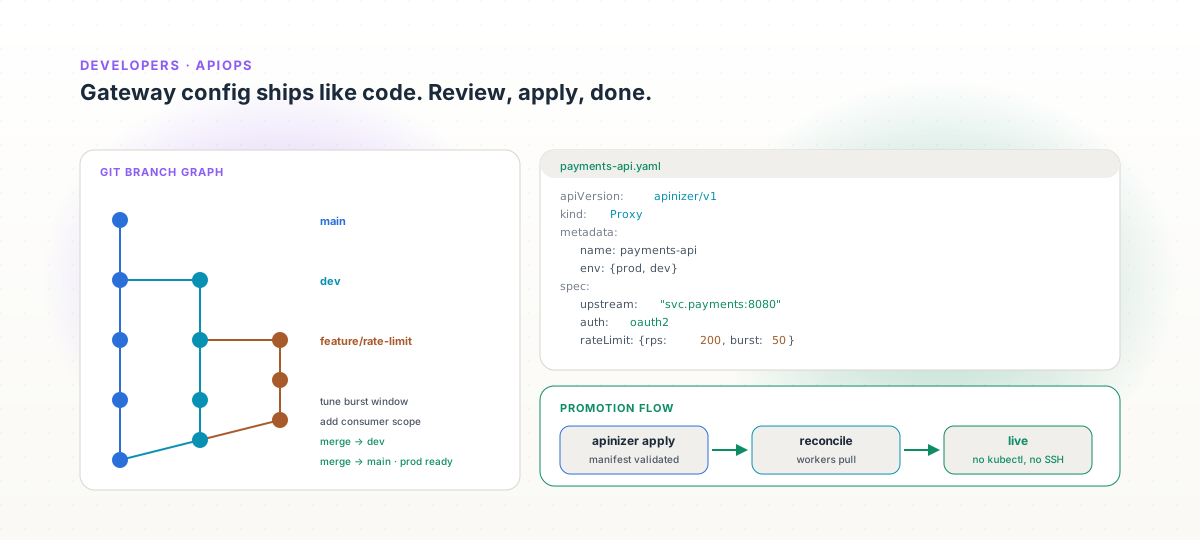
Describe APIs, policies, plans, identities, and topology as YAML manifests. Same shape across environments; environment variables for what differs.
Developers · APIops
APIops ships APIs, policies, and topology as manifests. Pipelines apply them idempotently with name-based references. The audit trail is identical to a UI change — nothing escapes governance.
The problem
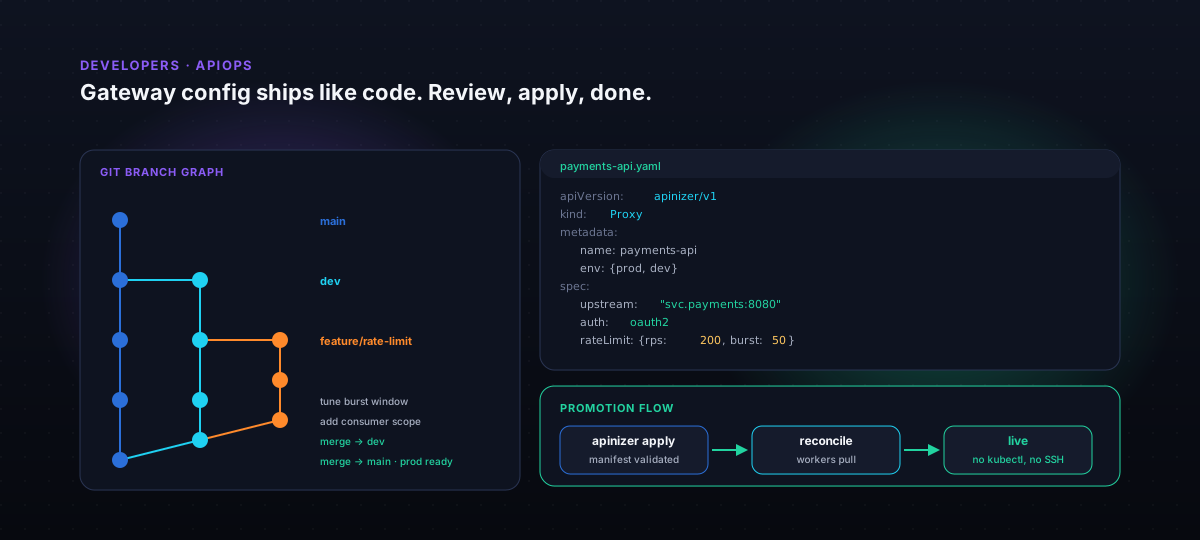
Engineers want changes in Git. Auditors want changes in the platform. Most gateways force a trade-off: either ship via a UI (and lose Git review) or hand-roll an API client (and lose audit). Apinizer's APIops manifests close the gap: changes ship from Git, apply idempotently, and the audit ledger records them the same way it records a UI change.
Capabilities
Describe APIs, policies, plans, identities, and topology as YAML manifests. Same shape across environments; environment variables for what differs.
Re-running an apply is safe. The platform compares current state to desired state and applies only the diff.
Manifests reference other resources by name, not by generated ID. Files survive environment promotion unchanged.
Pipelines apply with explicit credentials. Project and environment scopes apply the same way they do in the UI; bypass is rejected.
Every applied change writes to the audit ledger with the pipeline identity, the manifest version, and the diff that landed.
Apply from GitHub Actions, GitLab CI, Jenkins, Azure DevOps — anything that runs a shell. No magic; just a CLI and a manifest.
Use cases
Manifests reviewed in PRs; CI applies on merge. Audit shows the actor, the version, and the diff. UI access narrowed to read-only.
Same manifest, different environment variables. Promotion takes a CI job, not a meeting; rollback is git revert.
PRs auto-checked against policy rules — required auth, required rate limit, required tagging. Compliance team reviews only exceptions.
After-hours apply pipelines retired. APIs land Monday morning; rollbacks land Monday afternoon if needed; audit captures every one.
240 / week
Each PR provisions a sandbox project on the gateway. Tests run there; the project tears down on merge. No more 'works in staging'.
Plans and quotas live in Git. Marketing campaigns ship by PR; the platform team only reviews policy, not paperwork.
Platform-tier policies in one repo, project-tier definitions in another. CI authentication maps to the tier each repo owns.
Air-gapped sovereign cluster receives signed manifest bundles. Apply runs on the inside; audit reconciles weekly to the central trail.
Recommended products
The runtime that applies manifests idempotently and writes audit on every apply.
Open the Gateway pageDesign specs that ship as manifests; promote between environments unchanged.
Open the Designer pageAI lane manifests — routing rules, prompt firewalls, MCP registry — ship the same way.
Open the AI Gateway pageConfirm a deploy did what you expected — per-version traffic and quality.
Open the Analytics pageResources
Shapes, name-based references, idempotent semantics, audit behavior.
The hub for Apinizer's API-as-code surface.
Ship your first manifest in under five minutes.
Every Manager and APIops endpoint, generated.
Per-deploy telemetry — confirm a manifest applied does what you expected.
Where APIops fits in the topology.
API as code, audit included
A 30-minute walkthrough — manifests, pipelines, promotion, audit — on a Kubernetes of your choice.