Spec authoring in-platform
Draft OpenAPI 3.x in the platform. Reviewers leave comments in place; the spec is the working document, not the export.
Developers · Design
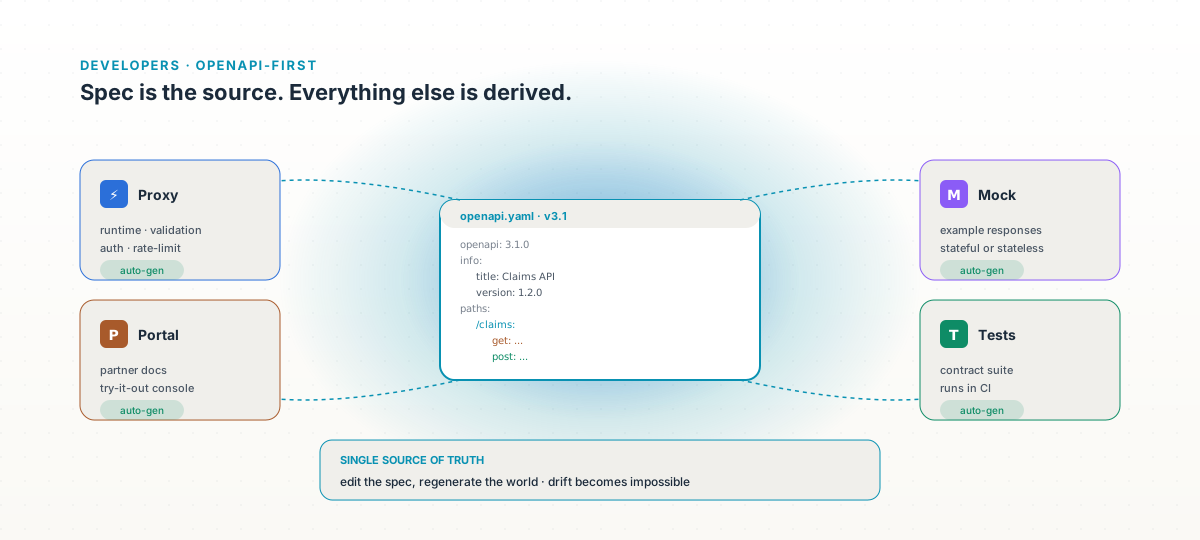
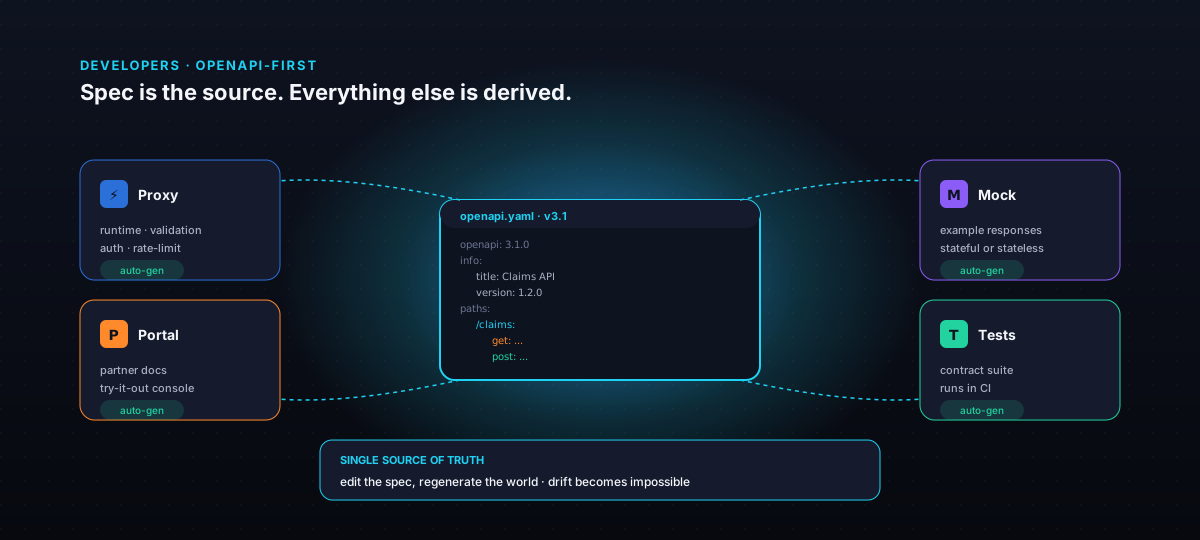
Apinizer's API Designer takes an OpenAPI draft, generates a governed proxy, ships a mock, and lists the endpoint in the partner portal — before any service exists.
The problem
Engineers ship the service, then write the OpenAPI to match — and the spec ages out the first time a feature ships without a doc update. Apinizer flips the order: the spec is the source of truth. Proxy, mock, portal, contract test — all derived from it. Drift is impossible because there's nowhere for it to live.
Capabilities
Draft OpenAPI 3.x in the platform. Reviewers leave comments in place; the spec is the working document, not the export.
Generate a governed proxy from the spec. Auth, rate limits, validation defaults applied — engineers tune from a starting point that's already correct.
Mock API generated from the same spec. Frontend, partners, and contract tests unblock immediately.
Request and response validation enforced at the gateway against the spec. Bad payloads rejected at the edge with clean errors.
Required fields, naming conventions, deprecation hygiene — checked on every PR. The platform team encodes the rules once; every team gets the lift.
OpenAPI fronting a SOAP backend, a gRPC service, or a stored procedure — the proxy translates the contract on the way through.
Use cases
Spec lands in Git; CI runs lint and policy checks. On merge, the proxy and mock generate; partners onboard against the mock the same day.
Every plant's APIs follow the same naming, the same auth, the same versioning. New plant onboarded in days, not quarters.
Required citizen-ID format, mandatory consent flag, audit-tag — checked in CI. Specs that miss a required field fail review.
Portal pages, code samples, and contract tests all derived from the spec. Partner docs never go stale.
Pre-existing services kept doing partial validation; Apinizer's spec-driven validation rejects bad calls before backends see them.
Designer specs map to SOAP operations. Modern consumers see clean REST; the legacy backend never changes.
FHIR resources mapped in the spec; downstream EHR translation handled by the proxy. Vendor connectors interoperate by construction.
Deprecation policy: each operation must declare a sunset date. CI rejects specs without one; the ministry catches debt before it ships.
Recommended products
Spec-first authoring with one-click proxy and mock generation.
Open the Designer pageRuntime that validates against the spec on every request.
Open the Gateway pageContract-driven mocks generated from the same OpenAPI document.
Open the Mock API pageAuto-generated partner portal pages from the spec.
Open the Portal pageResources
Spec authoring, proxy generation, mock generation, validation behavior.
Where specs live, get reviewed, and ship from.
Promote specs across environments without changes.
Browse every generated reference for Manager and APIops.
Per-spec, per-version traffic and validation telemetry.
Where Designer, Gateway, Mock, and Portal compose.
Spec is the contract
A 30-minute walkthrough — draft, generate, mock, govern — on a Kubernetes of your choice.