Zero-restart deploys
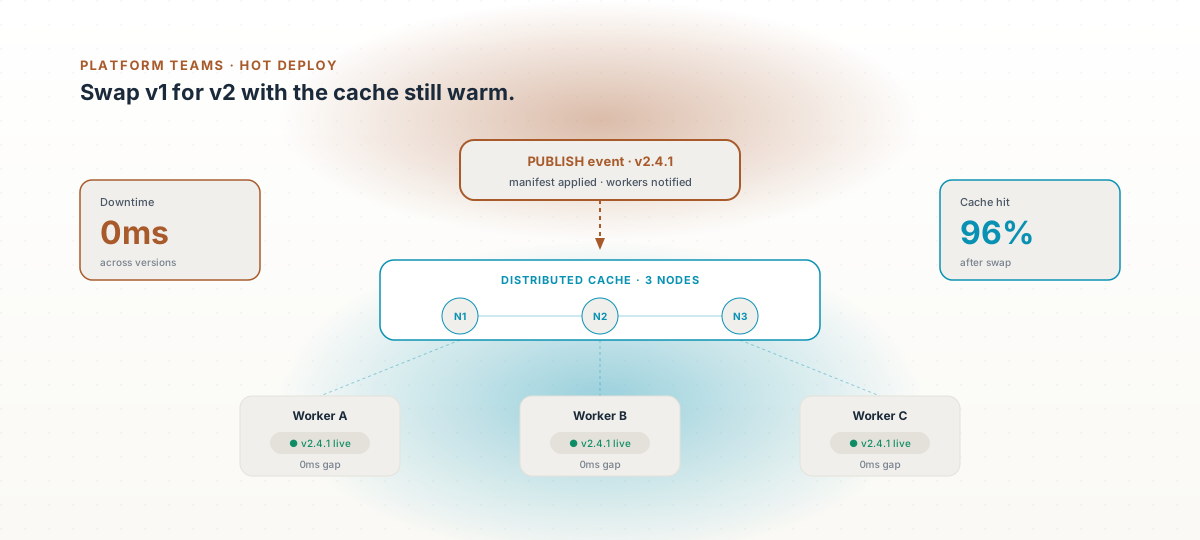
Apply a definition — the gateway picks up the new shape in place. In-flight requests finish on the old shape; new ones land on the new.
Platform teams · Runtime
Every definition, policy, and transform hot-loads on the running gateway. No restarts, no rolling reboots, no lost in-flight requests — and the distributed cache survives every pod reschedule.

The problem
A redeploy means a rolling restart. A rolling restart means warm caches go cold, connection pools rebuild, JWKs re-fetch, and tail latency spikes for ten minutes. Engineers learn to deploy on Fridays at 04:00 — which means they don't deploy. Apinizer's runtime treats a deploy as a config refresh: the gateway picks up the new shape in place, and the distributed cache holds steady.
restarts
per definition apply
propagation
across Workers
in-flight requests lost
Capabilities
Apply a definition — the gateway picks up the new shape in place. In-flight requests finish on the old shape; new ones land on the new.
Hazelcast-backed cache shared across every Worker. Survives reschedules; invalidations propagate cluster-wide in under a second.
Bust a cache key once; every Worker drops it. No more 'one node has the stale value' tickets.
Cache strategies per endpoint, per consumer, per response variant. Fast lanes for hot data, conservative TTLs for sensitive lookups.
Connection pools, JWK sets, OAuth introspection caches — all kept warm across deploys. New pods inherit warm state from peers.
Hit rate, miss rate, eviction reason — per endpoint, per region. Tune what's worth caching before it becomes a cost problem.
Use cases
Rate limits, headers, A/B routes — all hot-deployed during peak. Zero rolling restarts, zero abandoned carts attributable to platform.
40 deploys, 0 restarts
Identity provider rotates keys. The gateway picks up the new JWKs in place; in-flight tokens validate on the old key, new ones on the new.
97% cache hit rate on schedule lookups during peak commute. Invalidation on disruption fans out in 400ms.
97% hit rate
Hot-deploy carves 5% of traffic to the new shape. Telemetry confirms; the next apply moves the cutover to 100%. No deploy window negotiated.
Calculator API absorbs 12k RPS during a TV ad. Backend never sees more than 200 RPS; cache shoulders the rest with per-input TTLs.
60× backend reduction
Hazelcast keeps state across the cluster. When a pod reschedules, the new pod inherits the cache from peers — no cold-start storm to the backend.
Editorial publishes; the gateway invalidates affected keys cluster-wide. CDN pulls fresh in under a second; readers never see stale headlines.
APIops applies land hot. The platform team stops scheduling deploys for nights; the operations runbook loses its longest section.
How it works
Push a definition via UI, APIops, or pipeline. The Manager validates and broadcasts to every Worker.
Workers receive the change in under a second. The cache layer keeps hot keys; nothing is dropped.
In-flight requests complete on the old shape. New requests land on the new — no restart, no warm-up, no spike.
Analytics shows the cutover, cache hit rates, and tail latency in real time. Roll back is another apply.
Recommended products
Hazelcast-backed distributed cache with coordinated invalidation across every Worker.
Open the Cache pageThe runtime that hot-loads definitions, policies, and transforms without dropping a request.
Open the Gateway pageReal-time evidence that a deploy did what you expected — and rollback evidence when it didn't.
Open the Analytics pageSynthetic probes that fire seconds after an apply — confirm green before the team sees the alert.
Open the Monitoring pageResources
What apply, propagate, serve looks like under the hood — and why it doesn't drop requests.
Hazelcast-backed distributed cache with coordinated invalidation and per-key TTLs.
Live deploy cutover, hit rate, and tail-latency telemetry — per definition.
How the Manager publishes and Workers pick up changes without a restart.
Hot deploys driven from Git — the same apply that promotes across environments.
Recent runtime improvements — cache, hot deploys, and propagation guarantees.
Deploy without the dread
A 30-minute walkthrough — apply, propagate, cache, observe — on a Kubernetes of your choice.