Groovy or JavaScript
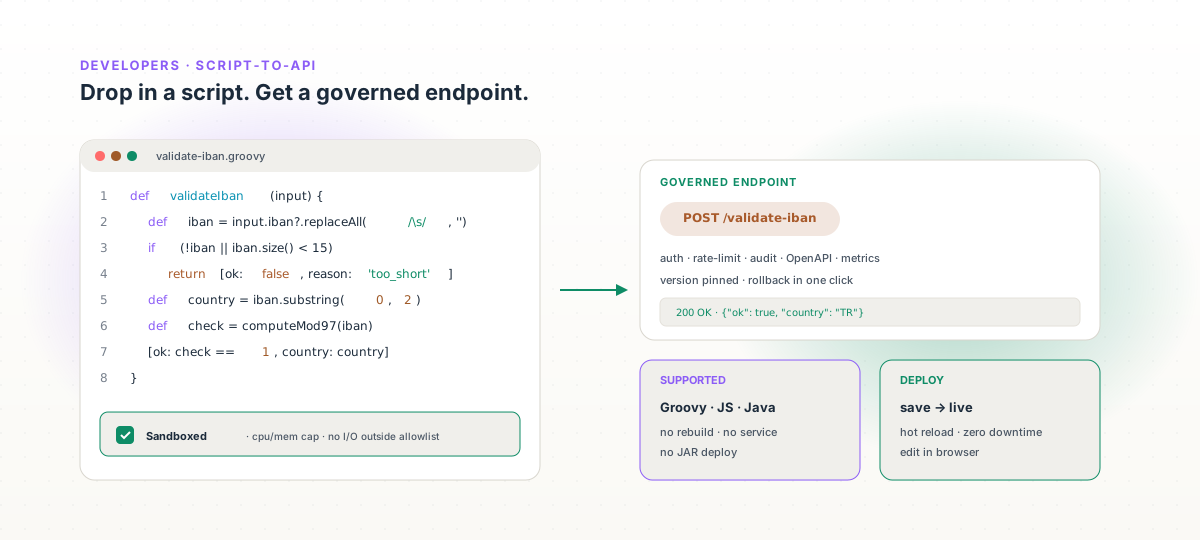
Pick the language that fits the team. Both run inside a sandboxed runtime with the same lifecycle hooks.
Developers · Scripts → API
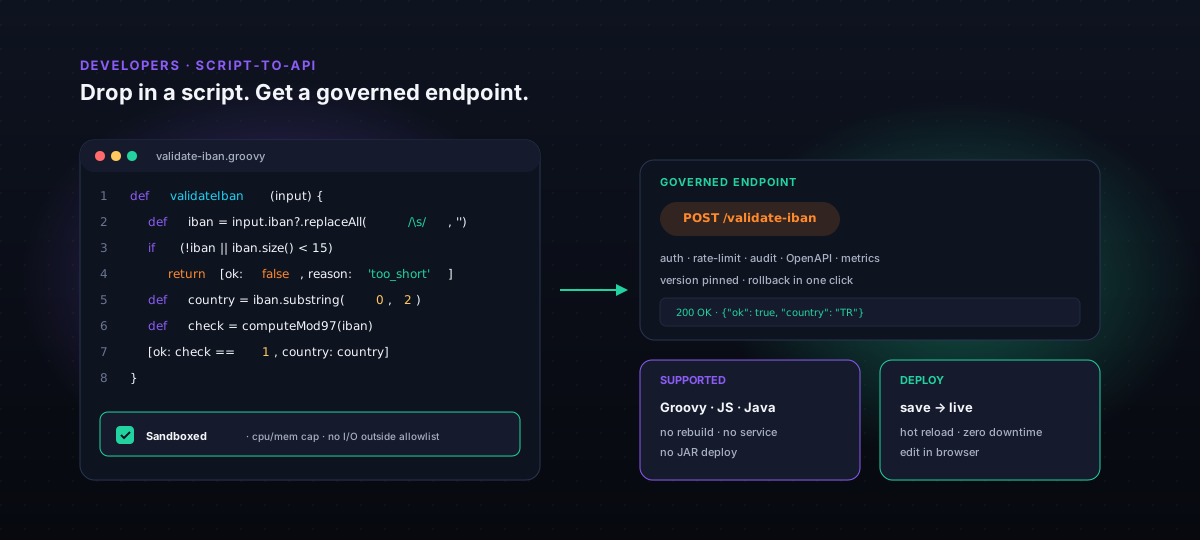
Script-2-API turns a Groovy or JavaScript snippet into a governed REST endpoint. The runtime sandboxes execution, applies platform controls, and gives you an OpenAPI spec for free.
The problem
A transform here, a calculation there, a small enrichment over a third-party API — none of these need a Docker image, a Helm chart, or a six-week onboarding to the platform. Apinizer's Script-2-API lets engineers drop a Groovy or JavaScript snippet into a governed runtime: same auth, same audit, same rate limits, none of the boilerplate.
Capabilities
Pick the language that fits the team. Both run inside a sandboxed runtime with the same lifecycle hooks.
Every Script-2-API endpoint inherits auth, rate limits, audit, and encryption — the same controls every other endpoint has.
Declare parameters and response shape; OpenAPI ships automatically. Partners discover scripts the way they discover REST APIs.
Scripts run inside guardrails — no arbitrary filesystem, no unscoped network. Resources controlled by the platform.
Scripts can call upstream APIs, databases (via connectors), or message queues — through the same governed channels the gateway uses.
Every change to the script writes to audit. Auditor sees the version that ran, who deployed it, and the request that triggered it.
Use cases
Each script enriches a core-banking call with risk-score or KYC data. No new services; no container images; same audit posture as the legacy stack.
60 endpoints, 0 containers
Groovy actuarial calculators that used to live in a spreadsheet are now governed endpoints. Auditor signs off because audit covers every call.
Junior engineers ship a new endpoint in one afternoon; the platform team only reviews policy, not boilerplate.
Each partner has slightly different field names. Script maps them; the downstream service sees a clean shape.
Groovy script fans out to billing, network, and CRM; assembles the response. No new microservice; same auth and audit.
Two scripts behind one endpoint; routing splits 50/50. New logic wins; promotion is one policy change.
Tag mappings, unit conversions, and enrichment ship as scripts. SCADA team keeps its protocol; consumers get a clean API.
Each partner integration has its own normalization script. New partner onboarded in two days; previous version preserved in audit.
Recommended products
Drop Groovy or JavaScript into a governed runtime — it ships as a REST endpoint.
Open the Script to API pageScript-2-API alongside DB-2-API and Mock API.
Open the Creator pageRuntime that applies the platform's auth, rate limit, and audit to every script.
Open the Gateway pageScripts can call into the same connector library as task flows.
Open the Integrator pageResources
Sandboxing, lifecycle, governance, and OpenAPI generation.
Groovy / JavaScript snippets as governed endpoints.
DB-2-API, Mock API, Script-2-API together.
Ship scripts as code, review in Git, apply idempotently.
Per-endpoint telemetry — including every Script-2-API.
Where Script-2-API runs in the platform topology.
Explore more
Code into endpoints
A 30-minute walkthrough — drop a script, declare params, ship — on a Kubernetes of your choice.