SQL or stored procedure
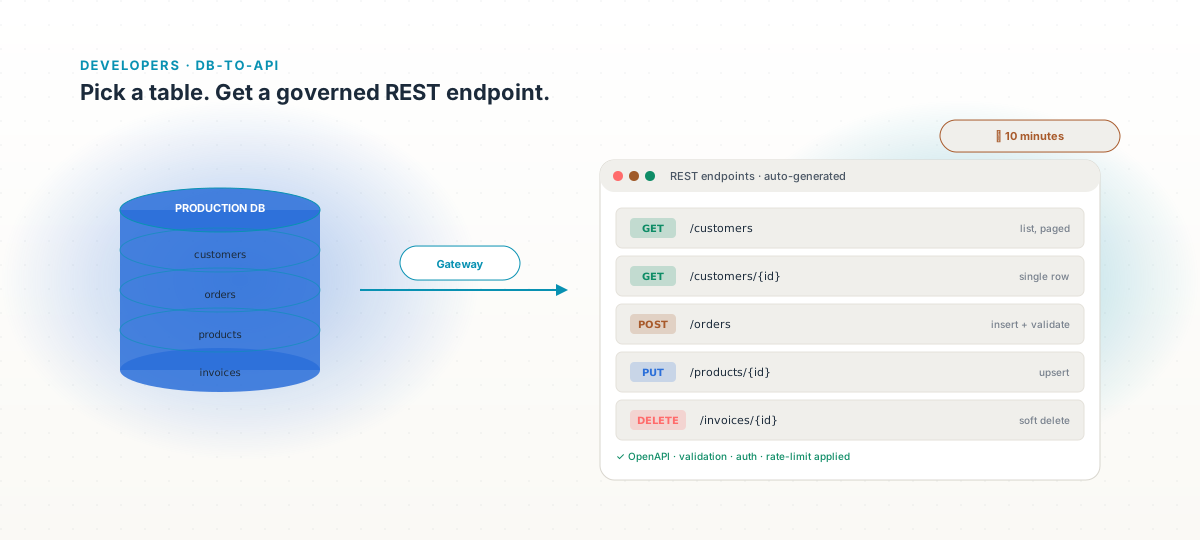
Bind a parameterized SQL query or a stored procedure name. The gateway handles binding, paging, type coercion, and result shaping.
Developers · SQL → API
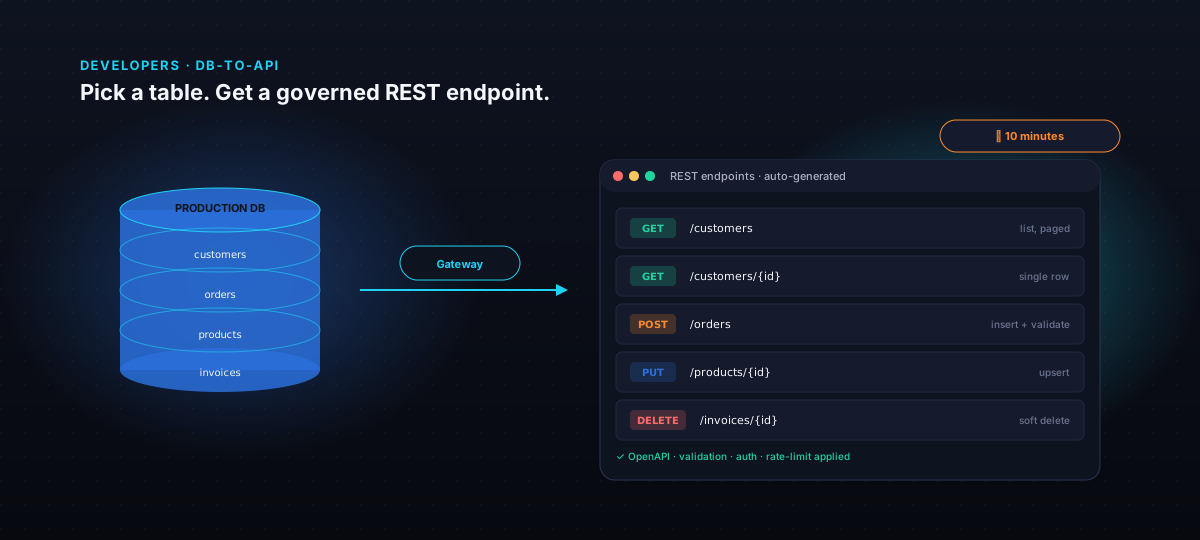
DB-2-API turns a parameterized query or stored procedure into a governed REST endpoint. The runtime handles auth, rate limits, validation, audit, and the OpenAPI spec.
The problem
Engineers spend whole sprints writing thin services in front of legacy databases — controllers, DTOs, validators — just to expose a query. Apinizer's DB-2-API skips the service: bind a SQL query (or stored procedure), declare parameters and types, and the gateway publishes it as a REST endpoint with full governance.
Capabilities
Bind a parameterized SQL query or a stored procedure name. The gateway handles binding, paging, type coercion, and result shaping.
Auth, rate limits, audit, encryption — all the API-Gateway controls apply automatically. DB-2-API is not a bypass; it's a governed shortcut.
Parameters, response shape, status codes — OpenAPI spec generated from the binding. Partner portal lists it like any other API.
DB credentials live in the encrypted vault. The query references them by name; the platform never logs them, never exposes them.
PostgreSQL, MySQL, MSSQL, Oracle, Db2 — the same binding pattern works across engines.
Every request captured — caller, parameters, latency, row count. The DB call shows up in audit the way every other endpoint does.
Use cases
Each procedure became a governed REST endpoint in a day. The mainframe doesn't know anything changed; the developer portal lists the new APIs the same morning.
40 procs, 1 sprint
Production-line queries published with rate-limit and partner-scoped auth. Suppliers self-onboard via the portal; no thin services to maintain.
FHIR-shaped responses from underlying relational tables. Audit covers every read; consent enforced at the binding layer.
Each store calls an inventory lookup; cache keeps DB load flat. New endpoints ship without writing service code.
What used to be a SOAP service from 2008 is now a paged REST endpoint with OpenAPI. Cache hit-rate at 98% during peak.
Procedure unchanged; the gateway publishes it as REST with auth, rate-limit, and audit. Claims chatbot integrates without touching the legacy team.
ESCOs subscribe via the portal; the gateway throttles per ESCO. The database team stops fielding ad-hoc requests for exports.
One binding, three consumer groups, three rate limits. Audit covers every call; the legacy DB stays where it is.
Recommended products
Turn queries and stored procedures into governed REST endpoints in minutes.
Open the DB to API pageDB-2-API alongside Script-2-API and Mock API — the full Creator surface.
Open the Creator pageRuntime that applies auth, rate limits, audit to every DB-2-API endpoint.
Open the Gateway pageSurface DB-2-API endpoints alongside the rest of your API catalogue.
Open the Portal pageResources
How to bind a query or procedure, declare parameters, and ship a governed endpoint.
The full Creator surface for database-backed endpoints.
DB-2-API, Mock API, Script-2-API — all in one place.
Per-endpoint, per-consumer telemetry — including DB-2-API endpoints.
Define bindings as code, review in Git, apply idempotently.
How DB-2-API fits in the platform topology.
SQL as API
A 30-minute walkthrough — bind, declare, publish, govern — on a Kubernetes of your choice.