API Creator · DB to API

ZERO MICROSERVICE

Create powerful REST APIs instantly from your database without any coding.

Write a SELECT, an INSERT, or call a stored procedure. Apinizer publishes it as a REST endpoint with parameter binding, type coercion, audit, and the same security policies as the rest of your gateway.

  • DatabasesOracle · PostgreSQL · MySQL · MSSQL · DB2 · Sybase · Hive · Impala · Trino · MongoDB
  • OperationsSELECT · INSERT · UPDATE · DELETE · PROCEDURE · BATCH
  • PoolHikariCP · vault-encrypted credentials

Inside the Manager

Every DB-to-API endpoint, one console.

Browse, edit, and govern every database-backed endpoint from the same Manager UI — across datasources, operations, and teams. The screen below is a real Apinizer DB-to-API editor.

Apinizer Manager — DB to API editor with datasource, operation, parameter binding, and pipeline controls
Apinizer Manager · DB to API editor · production screenshot

Capabilities · deep dive

Seven angles on the same idea: SQL is already an API.

From the driver list to the policy stack, DB to API is a complete path from a database to a production-grade endpoint — without writing a microservice, scheduling a pod, or owning a CI/CD pipeline.

01 · 10 FIRST-CLASS DATABASES

Bring your database. Apinizer brings the driver.

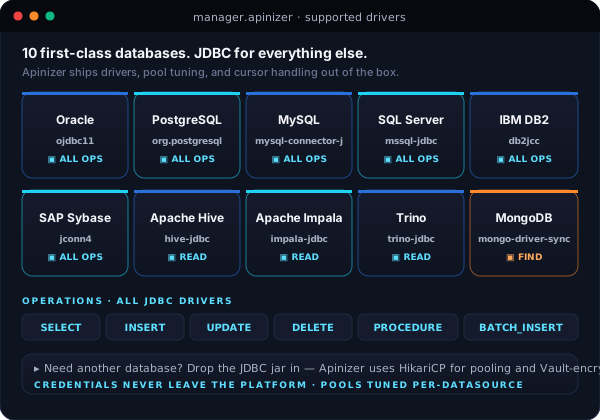
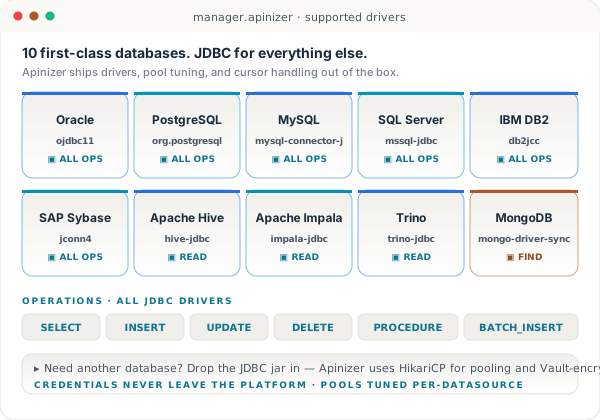
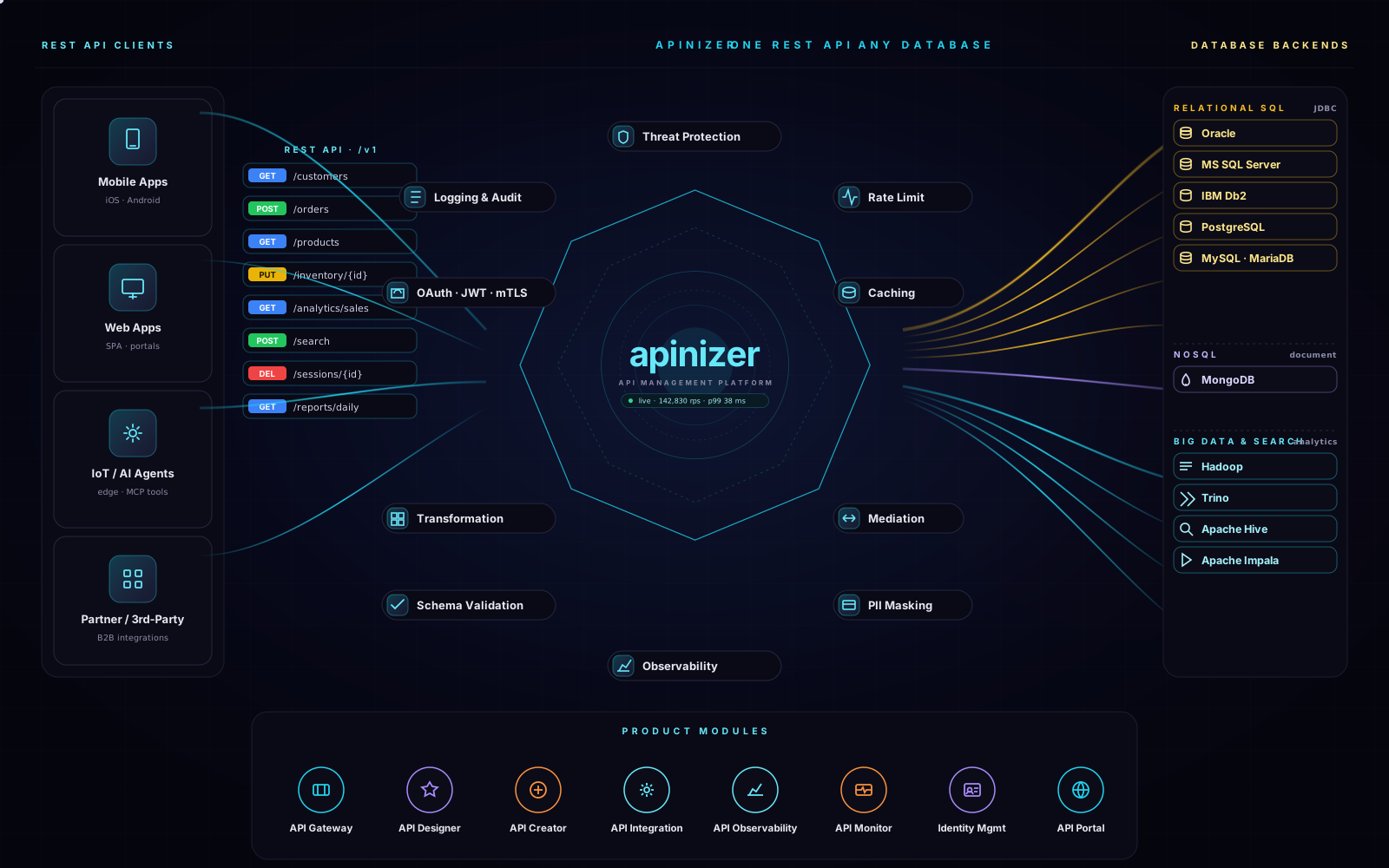
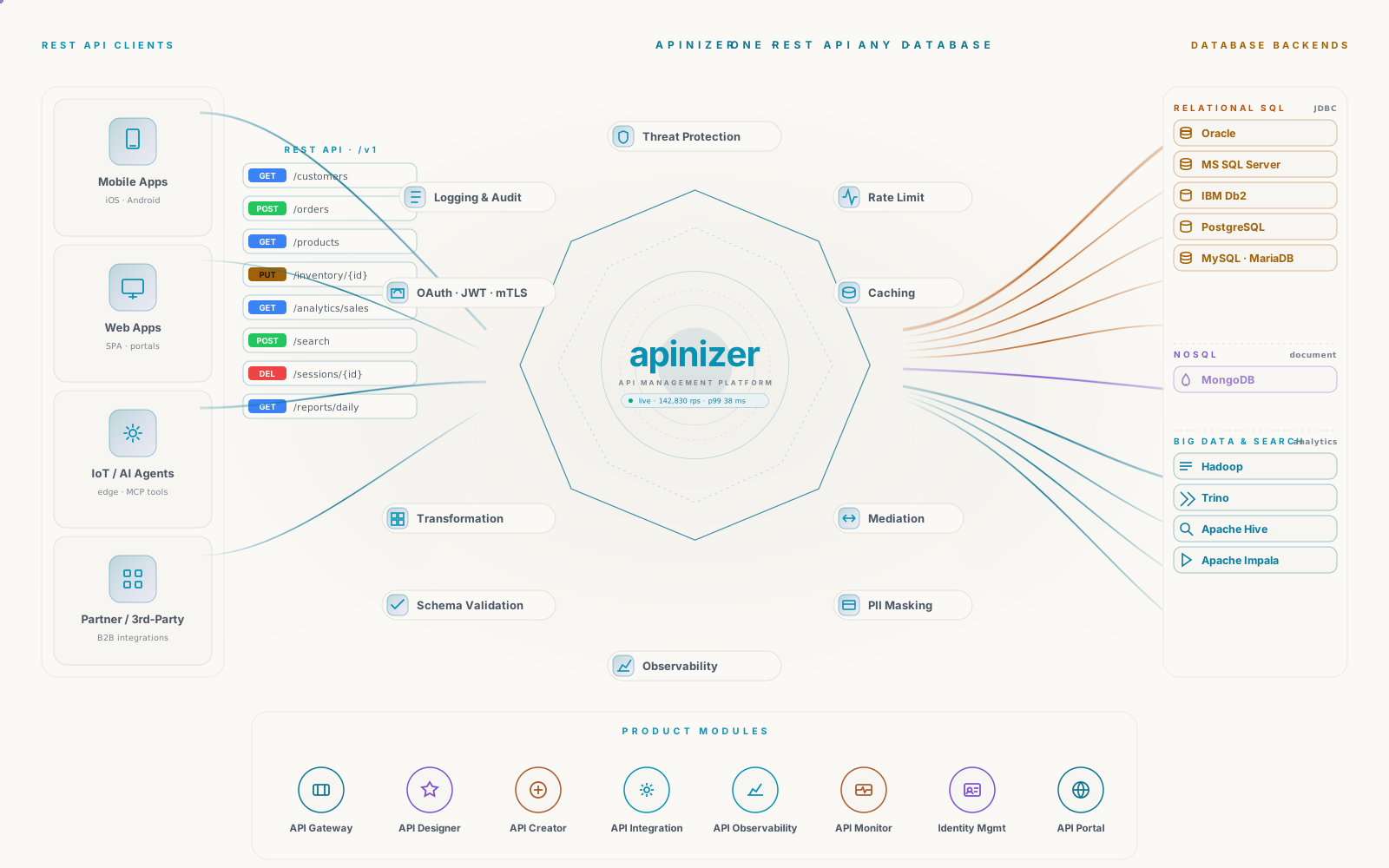
Ten databases ship with the platform — drivers, pool tuning, cursor unwrapping, and OUT-parameter handling are all built in. Add any other JDBC database by dropping its driver jar in.

  • Oracle, PostgreSQL, MySQL, SQL Server, IBM DB2, SAP Sybase
  • Apache Hive, Apache Impala, Trino — for warehouse and lake reads
  • MongoDB via the official driver (find-style queries)
  • JDBC-compatible? Drop the jar in, set credentials, you are done
  • JDBC
  • MongoDB
  • HikariCP
  • Vault secrets
Grid of supported database drivers — Oracle, PostgreSQL, MySQL, SQL Server, IBM DB2, SAP Sybase, Apache Hive, Apache Impala, Trino, MongoDB.

02 · DATASOURCE WIZARD

Connect once. Reuse everywhere.

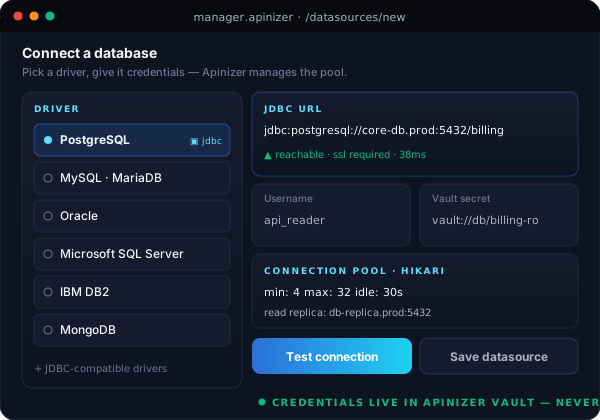
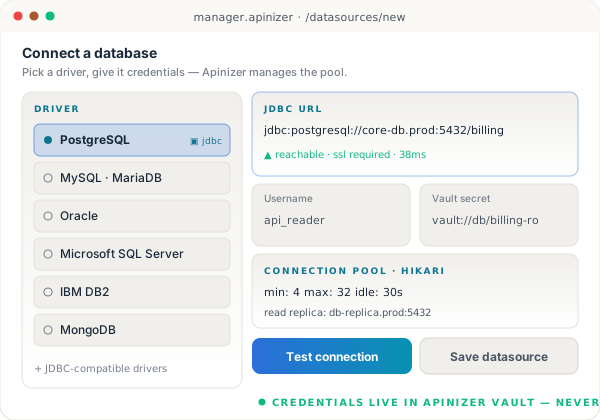
Pick a driver, paste the JDBC URL, store credentials in the platform vault. Apinizer test-pings the database, sizes the connection pool, and surfaces it to every endpoint that needs it.

  • JDBC URL or hostname / port / database fields
  • Credentials encrypted via Apinizer's secret vault — never in code
  • HikariCP pool with min / max / idle tuning per datasource
  • Optional read-replica routing for read endpoints
  • test connection
  • pool tuning
  • read replica
Database connection wizard with driver picker, JDBC URL field, vault-backed credentials, and Hikari pool configuration.

03 · SQL → ENDPOINT

Write the query. Apinizer wires the route.

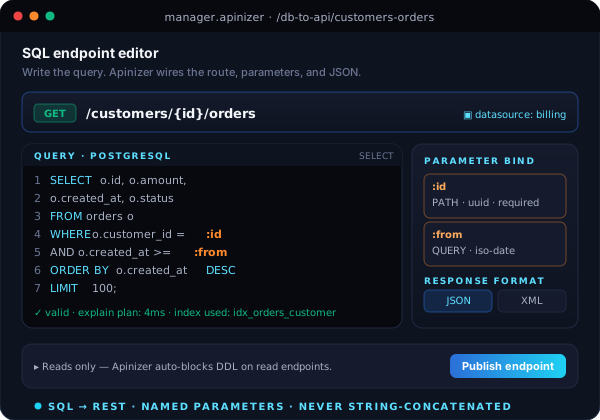
Type the SQL you would type in a client. Use named parameters like :customerId or :from. Map each parameter to a path segment, query string, header, or body field. Save — the endpoint is live.

  • Named parameters (:name) — never string-concatenated, always prepared
  • Per-parameter source: PATH · QUERY · HEADER · BODY
  • Type-aware binding: STRING, INT, LONG, DOUBLE, BOOLEAN, DATE, DATETIME, CLOB
  • JSON or XML response — toggle, never write a serializer
  • SELECT
  • INSERT
  • UPDATE
  • DELETE
  • TRUNCATE

Same lane for AI

DB-to-API endpoints are first-class proxies — an AI agent can hit them through MCP just like any other API surface, with the same auth and audit.

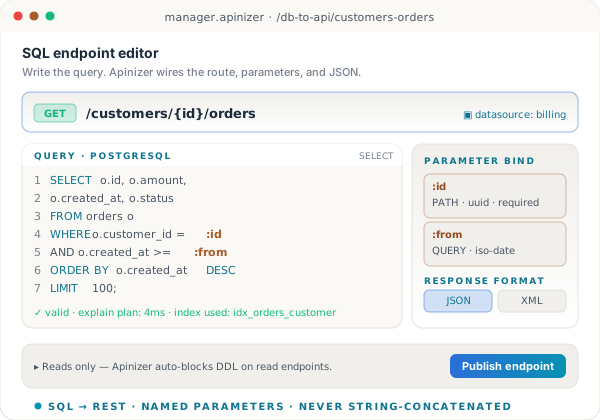
SQL endpoint editor showing a SELECT query bound to GET /customers/{id}/orders with named parameters and JSON response.

04 · STORED PROCEDURES

Multiple result sets and OUT parameters — in one JSON.

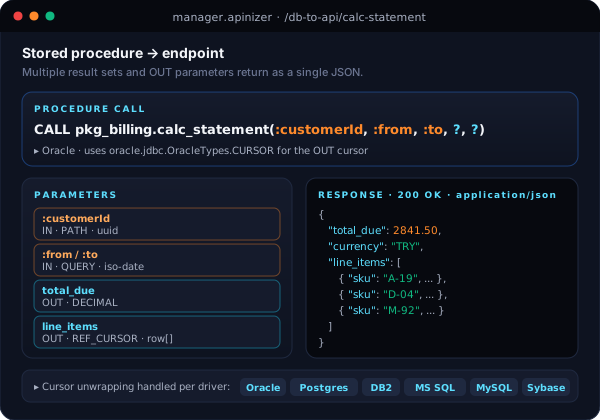
Procedures with REF_CURSOR results and OUT parameters return as a single, predictable JSON body. Apinizer handles the driver-specific cursor codes for Oracle, DB2, PostgreSQL, MySQL, SQL Server, and Sybase so your callers do not have to.

  • IN, OUT, INOUT direction per parameter
  • REF_CURSOR results unwrapped to JSON arrays
  • Multiple result sets walked via getMoreResults
  • Per-method query timeout (defaults to 30 seconds)
  • REF_CURSOR
  • OUT params
  • Oracle
  • DB2
  • Postgres
  • MSSQL
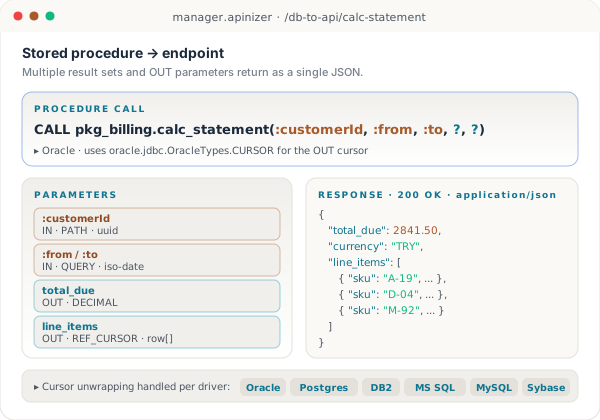
Stored procedure endpoint mock-up showing OUT parameters and a REF_CURSOR result set returned together as JSON.

05 · BATCH & TRANSACTIONS

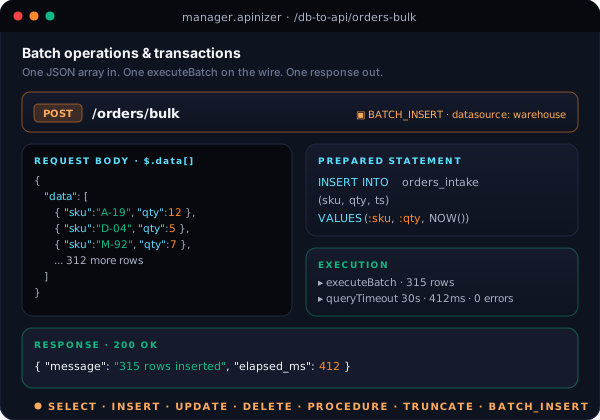
One JSON array in. One executeBatch on the wire.

Bulk-loading orders, ledger entries, telemetry rows? Drop a JSON array on /endpoint/bulk and Apinizer turns it into a single executeBatch — with row count, error reporting, and the same query timeout you set on every other call.

  • BATCH_INSERT reads $.data[] from the request body
  • Returns row count and elapsed time in a structured response
  • executeBatch on the JDBC driver — not row-by-row inserts
  • Same parameter binding, type coercion, and audit as single-row calls
  • BATCH_INSERT
  • executeBatch
  • $.data[]
Batch insert endpoint reading a JSON array of orders and dispatching them as a single executeBatch with timing and row count.

06 · RESPONSE SHAPING

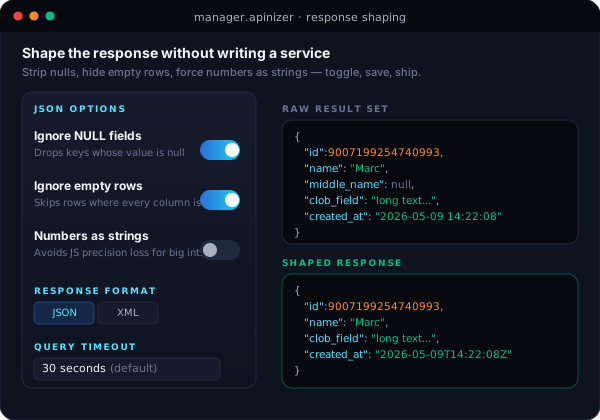
Strip nulls. Hide empty rows. Force big integers as strings.

Database results rarely match the JSON your callers want. Apinizer ships a response shaper so you don't write a thin service just to clean up nulls or coerce dates to ISO 8601. Toggle, save, ship.

  • Ignore NULL fields — drops keys whose value is null
  • Ignore empty rows — skips rows where every column is null
  • Numbers as strings — avoids JS precision loss for IDs > 2^53
  • Dates serialised as ISO 8601 in UTC — no caller-side parsing surprises
  • JSON
  • XML
  • ISO 8601
  • no precision loss
Response shaping toggles — ignore null, ignore empty rows, numbers as strings, output format JSON or XML.

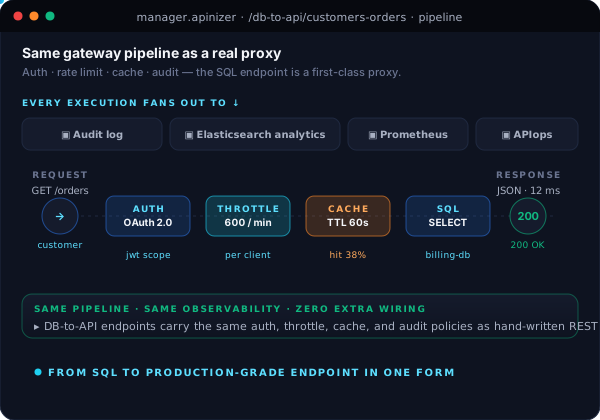
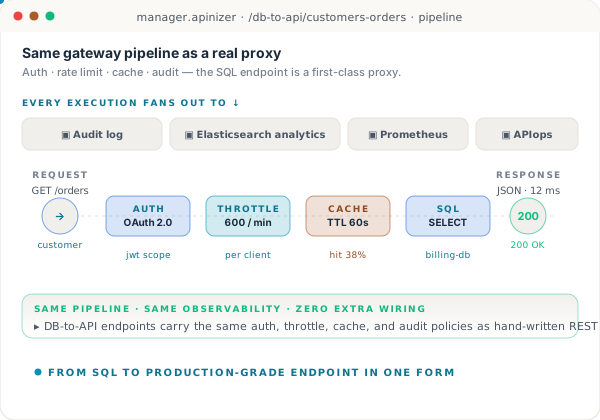
07 · SAME GATEWAY PIPELINE

A SQL endpoint is a first-class proxy.

DB-to-API endpoints are not second-class. They go through the same Worker, the same auth methods, the same throttling, the same cache, and the same Elasticsearch analytics as your hand-written services. Zero extra wiring.

  • OAuth 2.0 / JWT / API key / mTLS — all supported on DB endpoints
  • Throttling, quotas, IP allow-lists, header-based rate limits
  • Cache TTL or coordinated invalidation through Apinizer Cache
  • Every call audit-logged and indexed in Elasticsearch
  • OAuth
  • throttle
  • cache
  • audit
  • Elasticsearch
DB endpoint travelling through the gateway pipeline — auth, throttle, cache, SQL, response — with side fan-out to audit, analytics, Prometheus, APIops.

In the box

What's included

The capabilities below are part of the standard install — no add-on SKUs and no separate licenses.

Databases & operations

  • Oracle, PostgreSQL, MySQL, SQL Server, IBM DB2, SAP Sybase, Apache Hive, Apache Impala, Trino, MongoDB
  • SELECT, INSERT, UPDATE, DELETE, PROCEDURE, TRUNCATE, BATCH_INSERT (JDBC drivers)
  • MongoDB find-style queries with {{paramName}} placeholders
  • Drop in any other JDBC driver jar to add a database

Parameters & shaping

  • Named parameters (:name) bound from PATH / QUERY / HEADER / BODY
  • Per-parameter direction (IN / OUT / INOUT) and type
  • REF_CURSOR results and OUT parameters in one JSON response
  • Per-endpoint query timeout (default 30 s) — protects the database
  • Response shaping: ignore null, ignore empty, numbers as strings, ISO 8601 dates

Pipeline integration

  • Same auth surface as gateway proxies (OAuth 2.0, JWT, API key, mTLS, Basic)
  • Throttling, quotas, IP allow-lists, scope-based access
  • Cache TTL with coordinated invalidation across replicas
  • Audit log + Elasticsearch analytics + Prometheus metrics
  • APIops manifests so DB endpoints ship through CI/CD like any other proxy

Stop writing translation services

Some endpoints are just a SELECT. Stop building services for them.

See DB-to-API on a real database in a 30-minute walkthrough — including stored procedures, batch loads, and the policy pipeline.